

Choosing the best wooden play food set for your child depends on more than how realistic the pieces look. The right play food set should fit your child's age, play style, available space, and the way they use their play kitchen or pretend-play area.
Some children enjoy sorting fruits and vegetables, while others prefer preparing meals, running a pretend grocery store, or serving food to family members and stuffed animals.
Understanding these differences can make it easier to choose wooden play food that will actually be used during everyday play.
If you are comparing play food for toddlers, preschoolers, or an existing play kitchen collection, this guide covers the main factors to consider before you buy.

What Makes a Good Play Food Set?
A good play food set should give children pieces that are easy to handle and versatile enough for different kinds of pretend play.
When comparing options, look at the design, construction, age guidance, and the types of play the pieces can support.
Realistic Details and Open-Ended Play
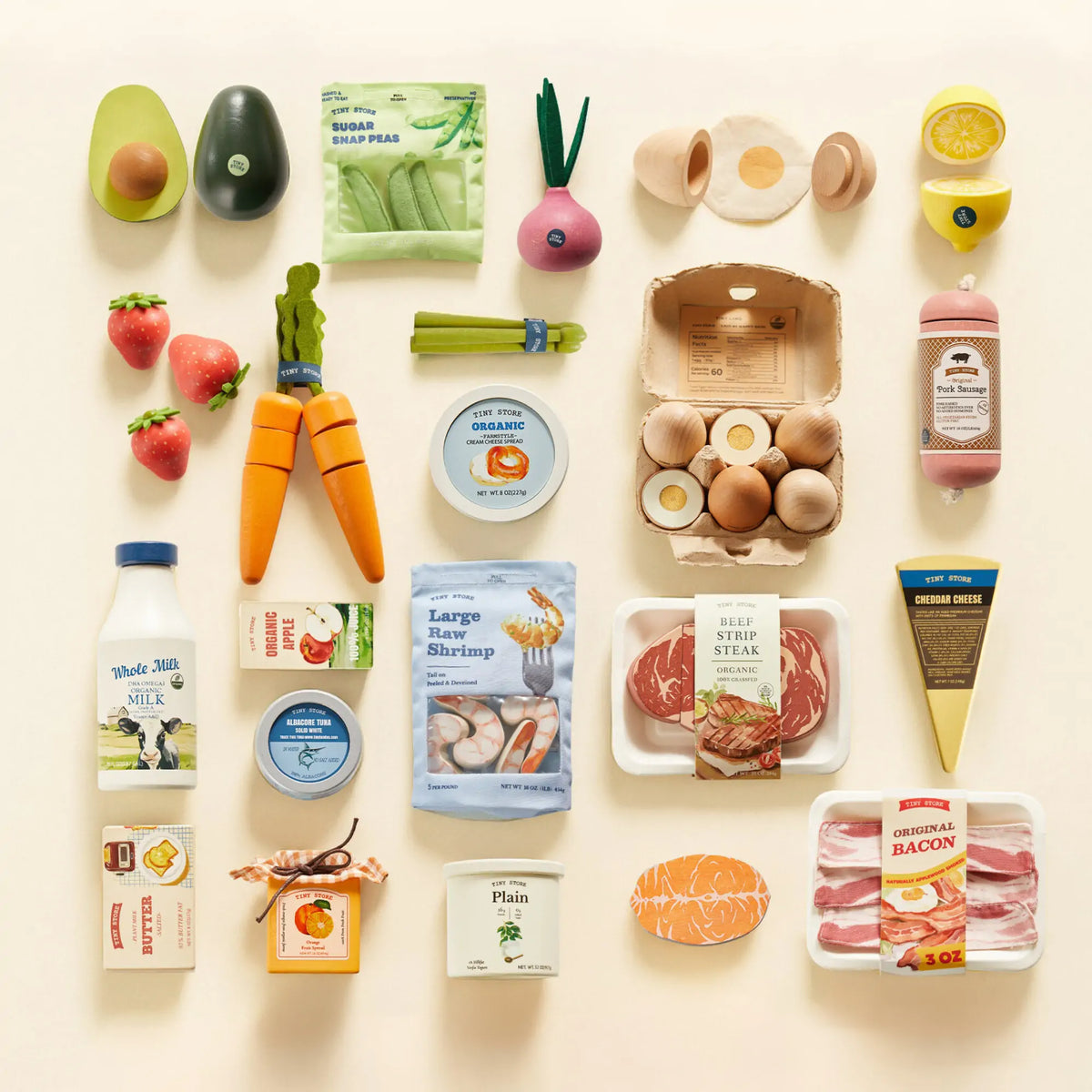
Realistic-looking pretend food can make pretend play feel more familiar and give children ideas for creating their own scenes. Fruits, vegetables, prepared foods, and other toy food can become ingredients for a pretend meal, items on a grocery shelf, or food served at a family table, supporting imaginative play in familiar settings.
However, realism does not have to limit how children play. Open-ended wooden food toys can be used in different ways depending on the child's imagination, and this kind of play with food can sharpen cognitive abilities.
When comparing realistic play food, consider:
-
Whether the pieces are easy for small hands to pick up and move
-
Whether the designs work for more than one pretend-play scenario
-
Whether the food can be combined with other play food or kitchen accessories
-
Whether the set fits the child's current interests

Durable, Easy-to-Handle Pieces
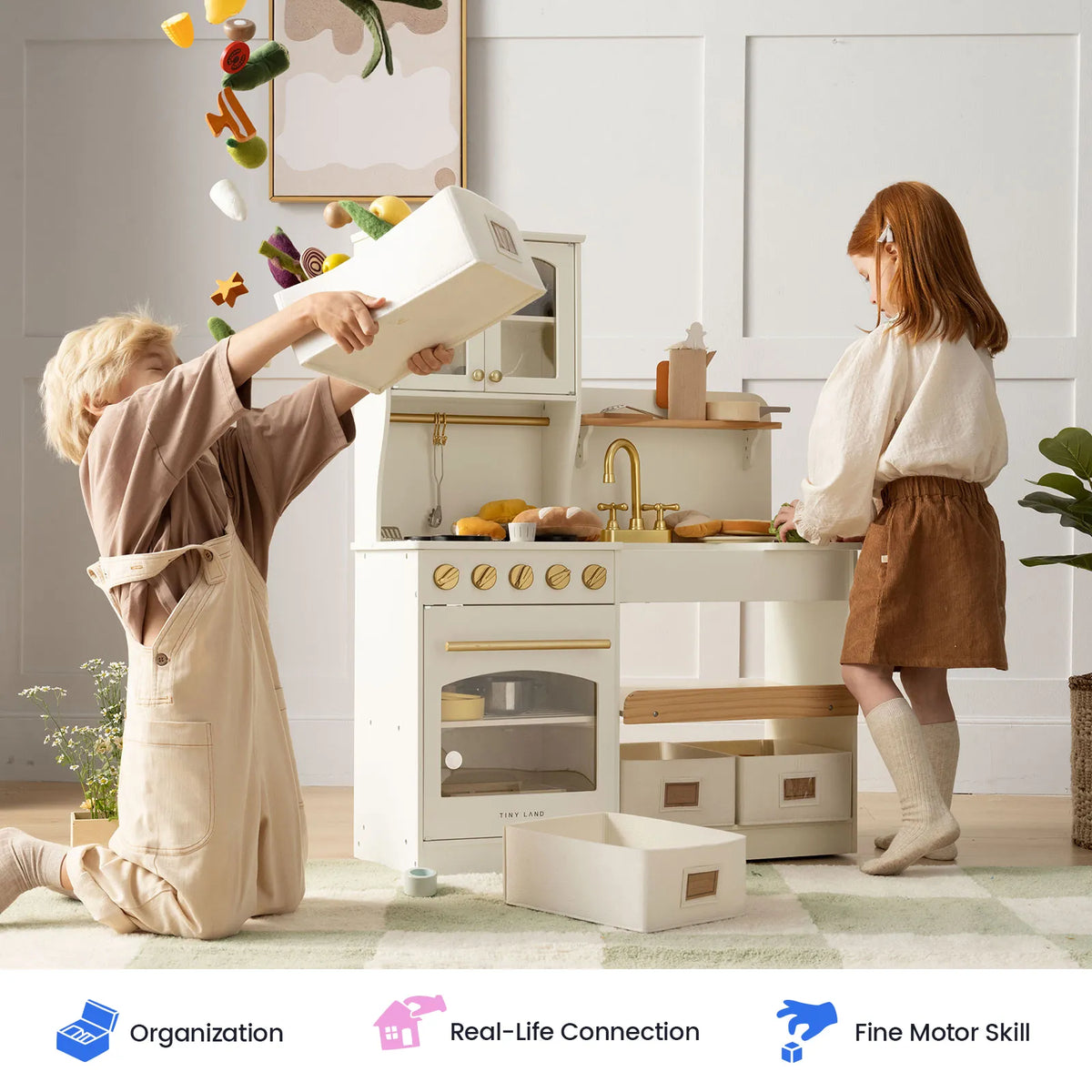
Play food is likely to be picked up, moved, sorted, stacked, served, and placed in different areas during pretend play, which can help build fine motor skills. For that reason, construction and everyday usability are important considerations.
When comparing wooden play food, consider the size and shape of each piece, the finish and construction described by the manufacturer, and whether the pieces are practical for the intended age group.
Manipulating utensils refines hand-eye coordination, and some play food sets also support counting skills during simple sorting or serving activities.
It is also useful to think about where the set will be used. A smaller collection may be easier to manage in a compact play area, while a larger collection can work well when a child has a dedicated play kitchen or pretend-play space.

Age Guidance and Safety Information
Always check the manufacturer's age recommendation before choosing play food for toddlers or younger children, as that guidance is important for picking a safe set that matches your child's developmental stage.
Age guidance can vary between products, even within the same category. Parents should also consider whether individual pieces are appropriate for their child's developmental stage and follow the manufacturer's care and safety instructions.
Rather than assuming that one type of wooden food toy is suitable for every child, use the official product information as the starting point for your decision.

Choose a Play Food Set by Your Child's Play Style
One of the easiest ways to choose a play food set is to start with how your child already likes to play.
Do they enjoy sorting and organizing? Preparing pretend meals? Shopping? Serving food to others? Matching the set to an existing interest can help you choose pieces that are more likely to become part of regular play.
For Food Exploration and Sorting
Fruit and vegetable-themed pretend food can be useful for children who enjoy grouping, sorting, and organizing objects.
A child might sort food by type, size, or color, arrange pieces on a pretend counter, or decide which ingredients belong together. These simple scenarios can also become part of a larger pretend grocery store or kitchen setup.
If your child naturally enjoys organizing objects, look for a set with food pieces that can be separated into recognizable categories, which can also introduce early math concepts.

For Cutting and Food Preparation to Develop Fine Motor Skills
A cutting food set is a natural choice for children who enjoy the preparation side of pretend cooking.
These sets can turn a play kitchen into a preparation area, where children can pretend to cut ingredients before cooking or serving them. When comparing cutting sets, check exactly which food pieces and preparation accessories are included rather than assuming that every cutting food set contains the same components, especially for young chefs.
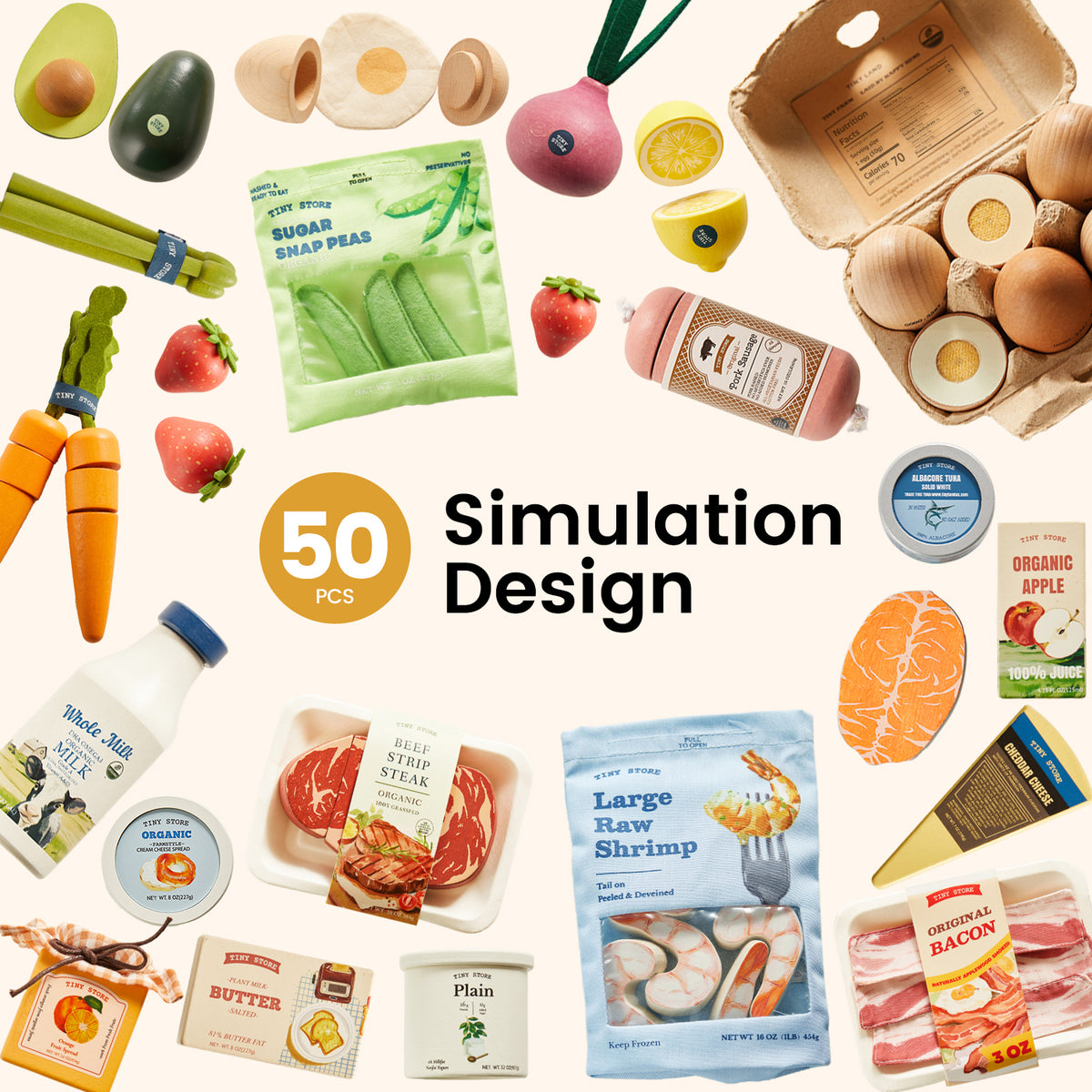
Many play food sets include multiple pieces, so checking the number and types of pieces can help you choose an option that fits your child's play needs. Always verify the exact contents of a set before purchasing.
This is particularly important when shopping for a wooden cutting food set, because the number and type of pieces can vary significantly between products.

For Grocery Store and Market Play
Children who enjoy shopping and organizing may prefer grocery store play food, especially if they like to stock shelves and sort items.
Pretend grocery play can involve choosing food, arranging items, filling shelves, and creating a simple checkout scenario, with children taking turns as the shop worker or the customer. Naming unfamiliar foods during grocery play can also help expand vocabulary and support language development. A market-themed setup can also work alongside a play kitchen, allowing the child to move between shopping and cooking scenes.
When choosing a market-oriented set, check whether the product is designed around food pieces alone or includes additional display or market components.
For Cooking, Serving, and Family Role Play
Some children are more interested in what happens after the food has been selected or prepared. They may enjoy pretending to cook, setting a table, serving meals, or preparing food for parents, siblings, or friends, and these shared role-play scenes can support social skills.
For this type of play, consider play kitchen food that can be combined with the child's existing kitchen accessories, since play food sets are designed to enhance creativity.
A flexible collection does not necessarily need to contain every type of food. A smaller selection that fits the child's favorite pretend meals may be more useful than a large collection that is difficult to organize.

Types of Wooden Play Food Sets
Not all wooden play food serves the same purpose. Comparing the type of food and the intended play scenario can help you narrow down your options.
Fruit and Vegetable Sets
Fruit and vegetable sets, often including wooden fruits, are a straightforward option for children who enjoy food sorting, grocery play, and simple kitchen scenarios.
They can be used as ingredients, grocery items, or food for serving, with realistic pieces often designed in vibrant colors, depending on the rest of the child's pretend-play setup.
When comparing products, review the current product page to see exactly which food pieces are included.

Dairy, Meat, Seafood, and Egg Sets
Food sets can also focus on other categories commonly found in a kitchen or grocery setting, including dairy, meat, seafood, and eggs.
These pieces can expand an existing collection and give children more options when creating pretend meals or grocery-store scenes.
If you are adding to a collection rather than buying a first set, consider what types of food your child already has before choosing another set.

Cutting Food Sets
Cutting food sets are designed around pretend food preparation, making them a fun option for budding chefs. Depending on the specific product, they may include food pieces designed to be separated and put back together.
Because included pieces vary by product, always check the current product listing for the exact contents before purchasing.

Market Crates and Display Sets
Market-oriented play food accessories can add another layer to grocery store, pretend market, or pretend shop play.
These products can be useful when a child already enjoys organizing food or has a larger pretend-play setup, and some market sets also include a sign for labeling the display. Before buying, check whether the current product includes crates, displays, food pieces, or other accessories rather than relying on category names alone.
How Much Play Food Do You Need?
There is no single ideal number of play food pieces for every child. The right amount depends on the size of the play area, the child's age, and how they prefer to play.
A Simple Starter Set
If your child is new to pretend food, a smaller play food set can be a practical starting point and even perfect for a child just starting pretend food play.
Instead of trying to recreate an entire kitchen at once, choose food that supports the child's favorite play scenario. A few familiar pieces can be enough to start a pretend grocery trip, prepare a meal, or serve food.
Starting smaller can also make it easier to see which types of pretend food your child actually uses.

Building a Larger Play Food Collection for Your Play Kitchen
Once a child has an established play kitchen, additional play food accessories can expand the range of pretend scenarios and open up a wider world of make-believe meals.
You might add different food categories, a cutting set, or market-oriented pieces based on how your child plays. Building the collection gradually also makes it easier to avoid buying overlapping products.
For inspiration on using play food in different ways, see our guide to play food activities for toddlers.
Avoiding Too Much Clutter
More pieces do not automatically mean more play.
A large collection can become difficult to sort, store, and find. If play food frequently ends up scattered around the room, consider keeping a manageable selection accessible and storing additional pieces separately.
Storage can also become part of the pretend-play setup. Food can be grouped by category or organized according to how your child uses the pieces.

How to Match Play Food with a Play Kitchen
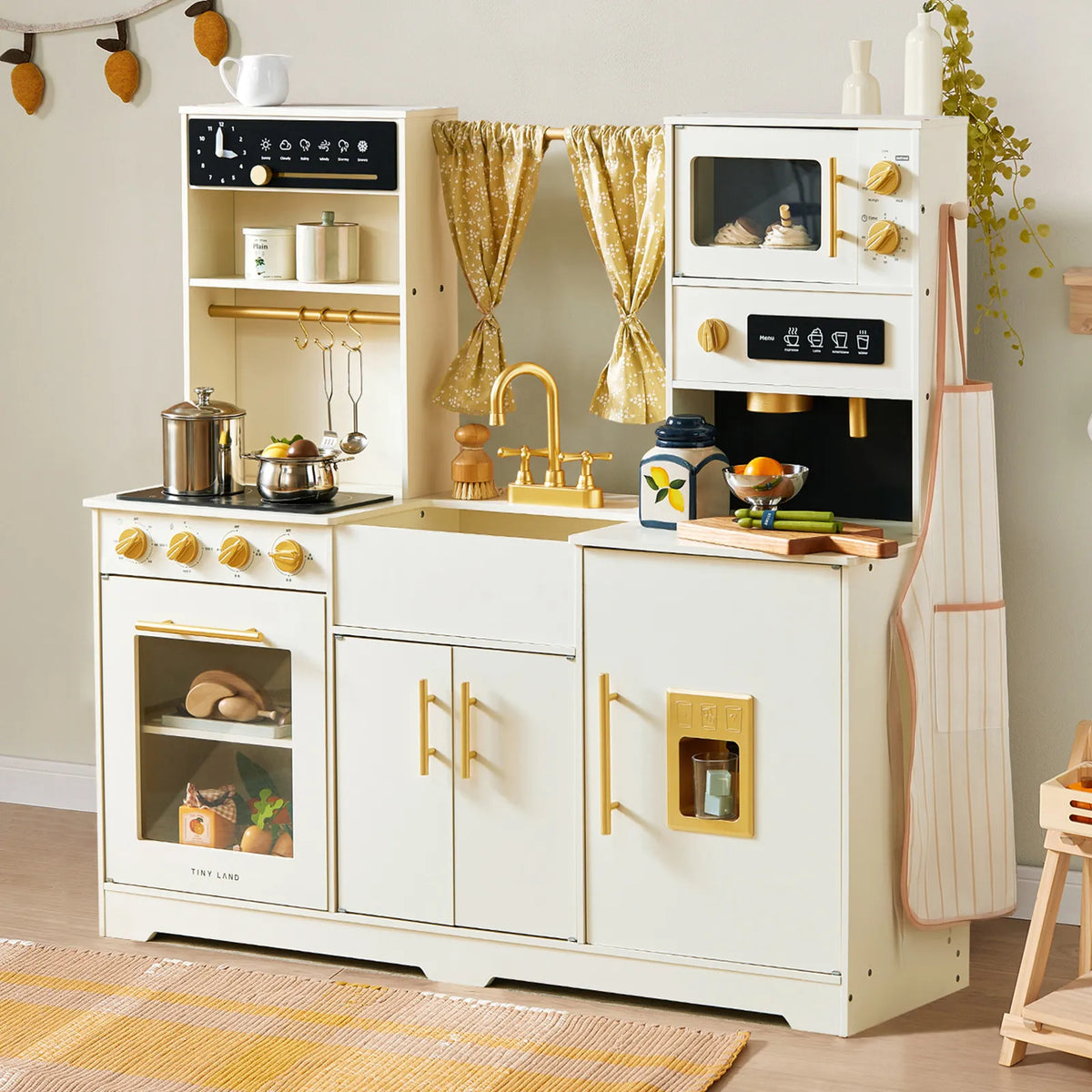
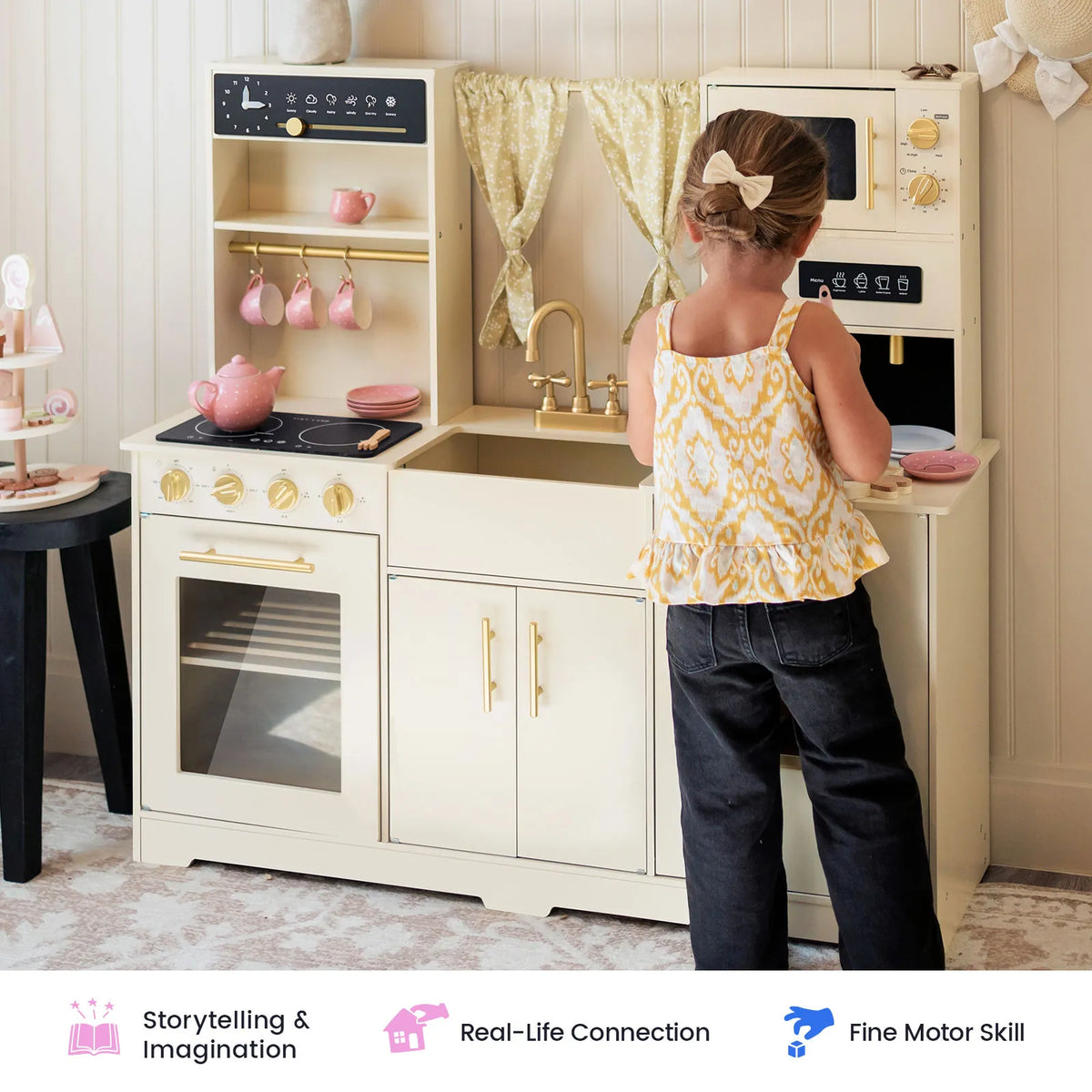
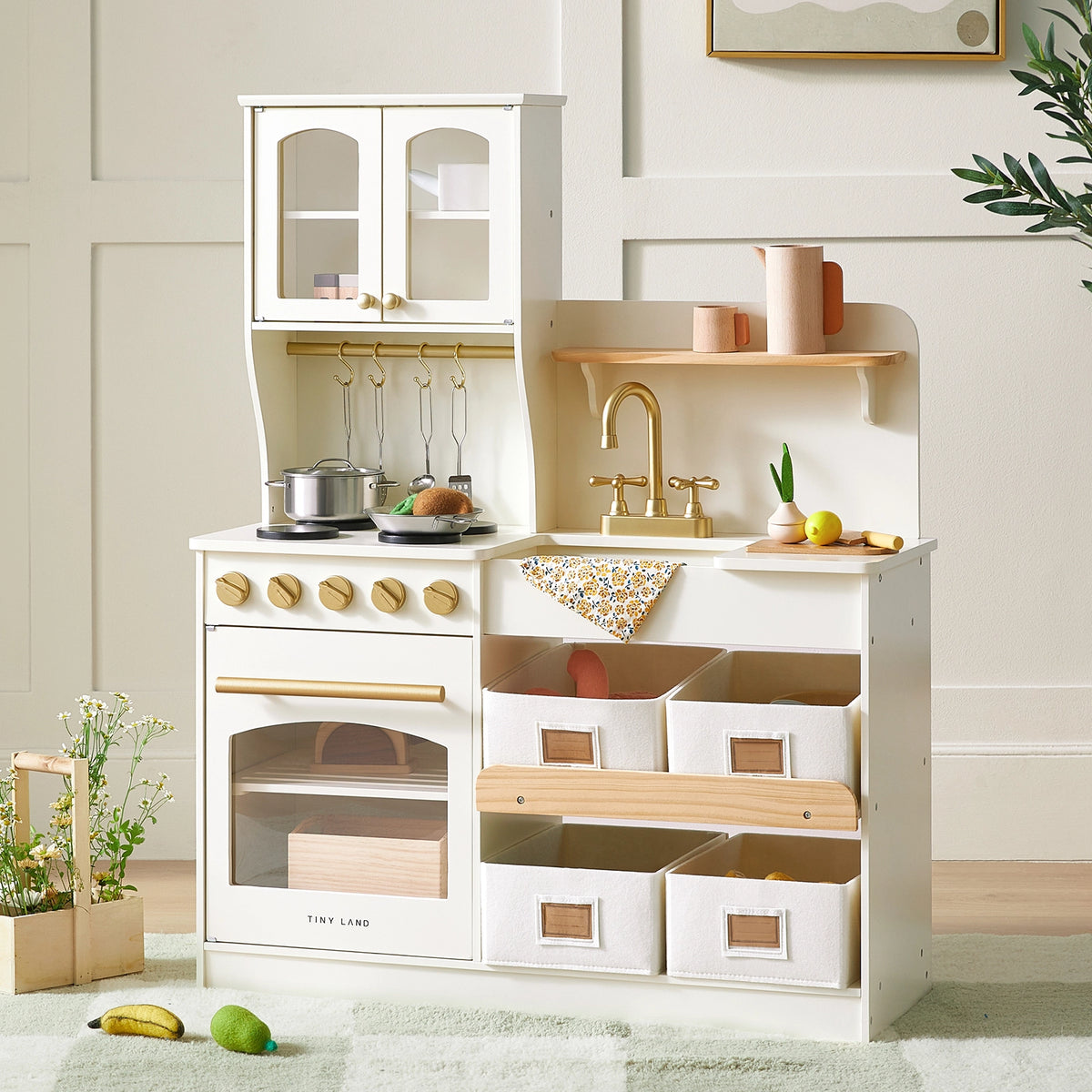
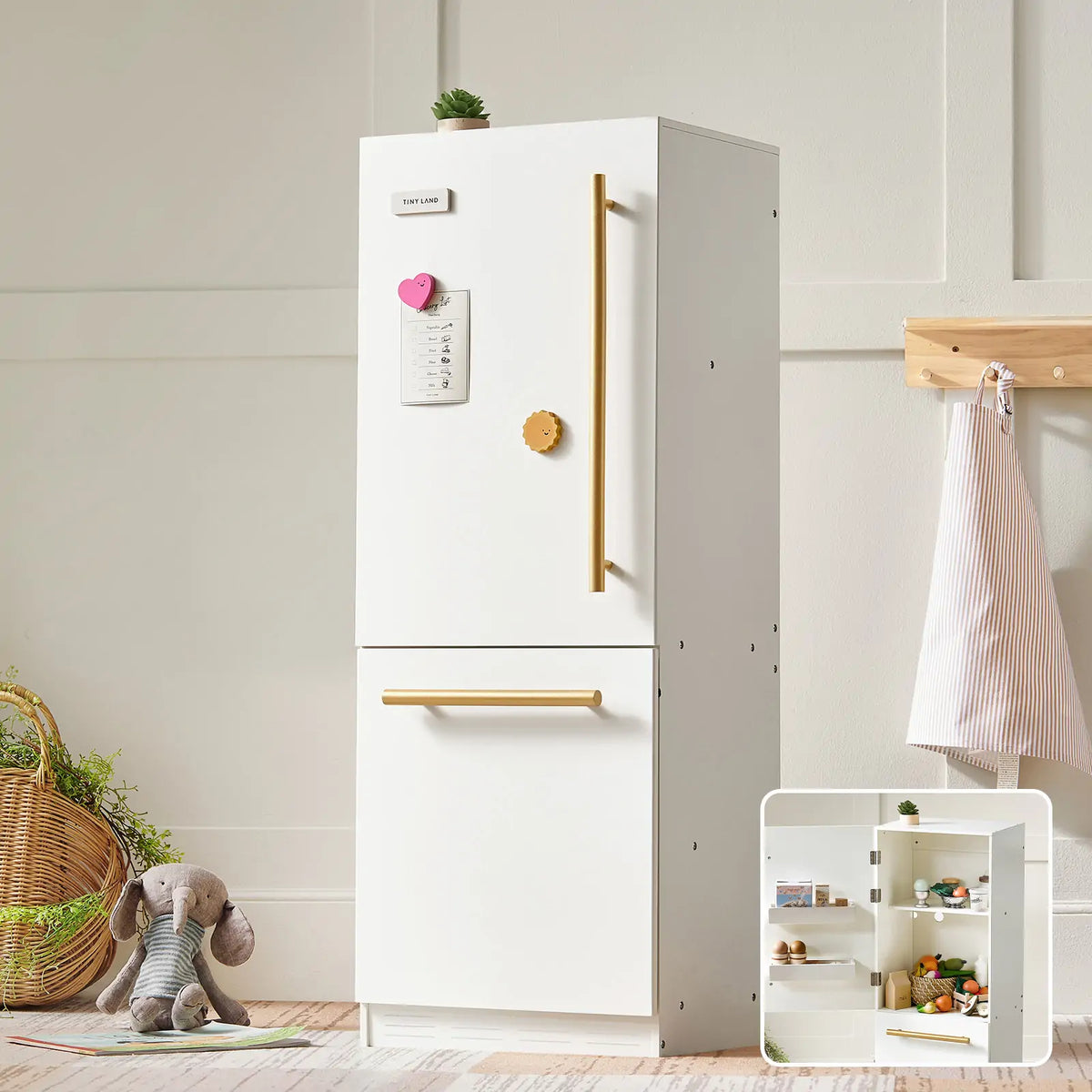
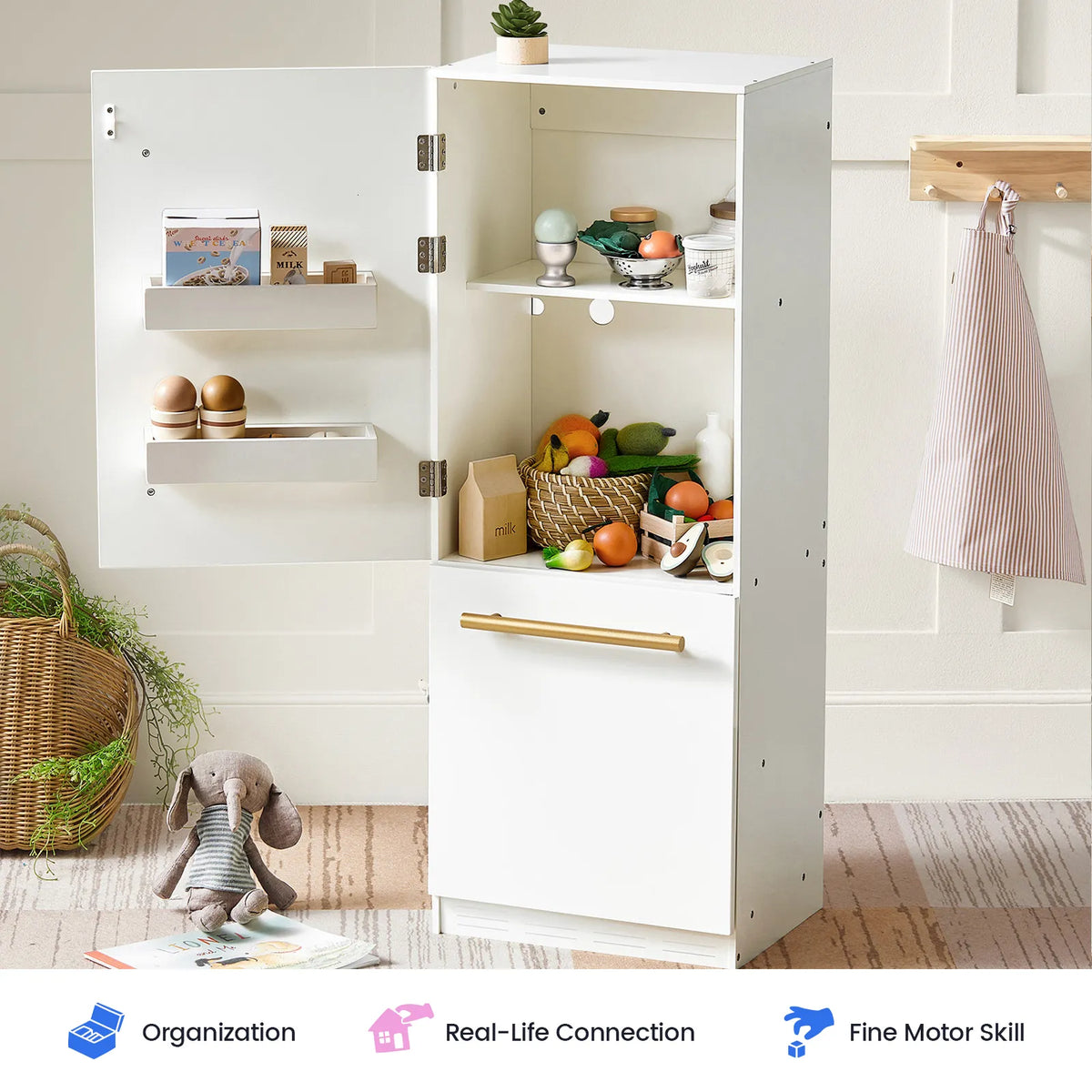
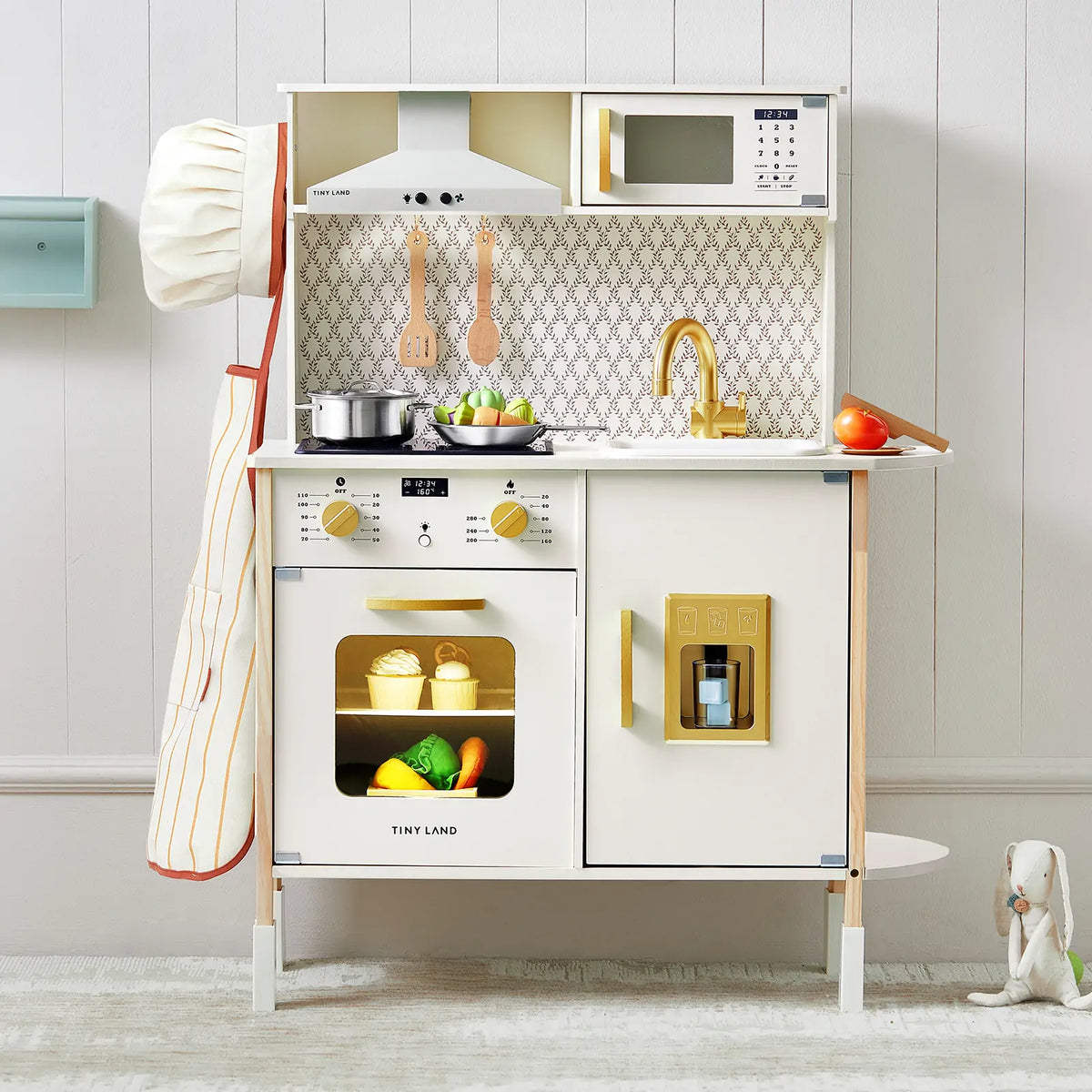
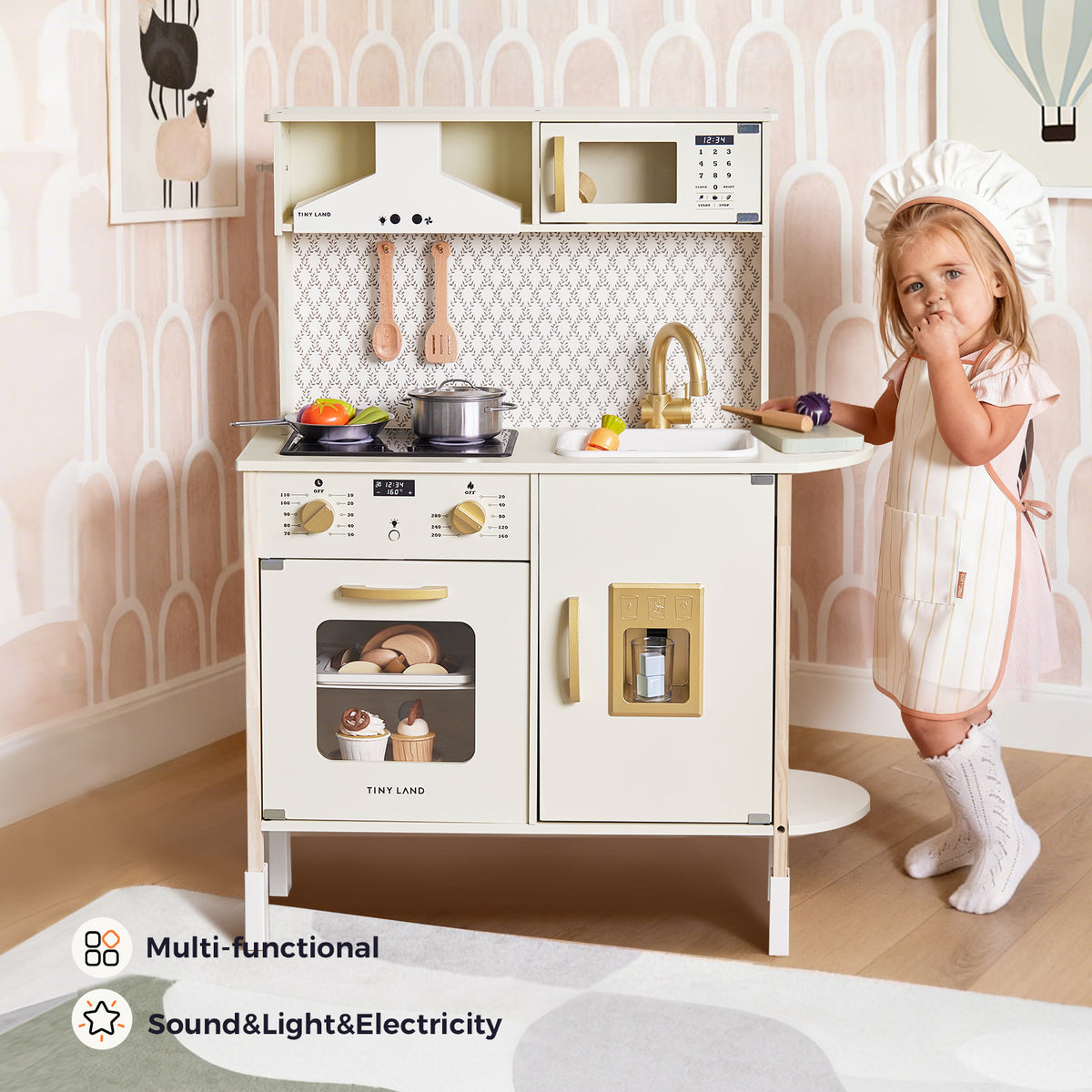
If your child already has a play kitchen, consider the kitchen's layout and the type of scenes they enjoy creating before choosing additional play kitchen food.
A good match does not require every product to come from the same collection. Instead, focus on whether the food pieces support the way your child uses the kitchen.
Cooking and Serving Scenes
For cooking-focused play, choose food that can function as ingredients or finished meals within the child's pretend kitchen, and some sets also include utensils children can use to test or serve pretend meals.
A combination of different food categories can give children more options for creating meals, preparing ingredients, and serving others, and they may also pretend to close oven or grill parts as part of the scene if their kitchen includes them.

Grocery Store and Restaurant Scenes
If your child enjoys role-playing as a shopper, cashier, restaurant owner, or server, consider adding food that can move between market and restaurant scenes where children practice kind exchanges.
A play food collection can become the bridge between a pretend grocery store and a pretend kitchen: food can be selected from a shelf, brought into the kitchen, prepared, and served, with one child playing the customer while another serves or cooks.
Explore Tiny Land's play kitchens to see how a play kitchen can complement a growing pretend-food collection.
Storage and Organization
Think about storage before expanding your collection.
Food pieces can be grouped by category, activity, or frequency of use. Keeping the most-used pieces easy to reach can make independent play simpler, while less frequently used sets can be stored separately.
The goal is not to have the largest collection, but to create a setup that your child can easily understand and use.

Wooden Play Food vs. Plastic Play Food
Both wooden and plastic toy food can work for pretend play. The better choice depends on your family's preferences, the child's age, the intended use, and the specific product.
|
Factor |
Plastic Play Food |
|
|---|---|---|
|
Durability |
Often chosen for its solid construction and long-term everyday use |
Can vary considerably depending on the type of plastic and construction |
|
Cleaning |
Care instructions depend on the individual product and finish |
Some products may be easier to wipe or clean, depending on the design |
|
Design |
Often offers a natural, solid-piece appearance |
Can offer a wide range of shapes, colors, and designs, and some sets include color-changing effects with water so kids can watch pretend meals transform |
|
Weight |
Generally feels more substantial in the hand |
Often lighter |
|
Family preferences |
A popular choice for families who prefer wooden toys |
May appeal to families prioritizing lightweight or easy-care options |
There is no universal winner. When comparing wooden play food with plastic alternatives, look at the specific product rather than making a decision based only on the material, and compare interactive features like color-changing water play when that matches your child's interests.

Frequently Asked Questions
What age is wooden play food suitable for?
Age suitability depends on the individual product. Always check the manufacturer's official age recommendation and safety information before purchasing play food for toddlers or younger children.
What play food should I buy first?
Start with your child's preferred play style. If they enjoy sorting, consider food that can be grouped by category. If they like cooking, a cutting food set may be more relevant. If they enjoy shopping and organizing, grocery-oriented pretend food may be a better starting point.
Is wooden play food better than plastic?
Not necessarily. Both materials can work well for pretend play, though some parents prefer wooden sets because they are carefully crafted. Compare the specific product's construction, design, care requirements, weight, age guidance, and your family's preferences before choosing; plastic sets may offer brighter color variety, while some wooden options come in neutral finishes such as white.
Can play food be used with any play kitchen?
In many cases, play food can be used alongside a variety of play kitchens, but compatibility depends on the size and design of the products. Consider the available counter, shelf, storage, and serving space in your particular play kitchen.
How do I store play food pieces?
Group pieces by food type or activity and keep frequently used items within easy reach. If your collection becomes large, rotating some sets can help reduce clutter while keeping the play area manageable.

Find the Right Play Food Set for Your Child
The best wooden play food set is not necessarily the largest set or the one with the most realistic details. It is the set that fits your child's age, interests, play style, and existing play space.
Before buying, compare the included pieces, product specifications, age guidance, and intended use. Then consider whether the set can work with the play kitchen and pretend-play accessories you already have.
Not sure where to start? Explore Tiny Land's wooden play food sets, and click through to find a collection that matches your child's favorite way to play.