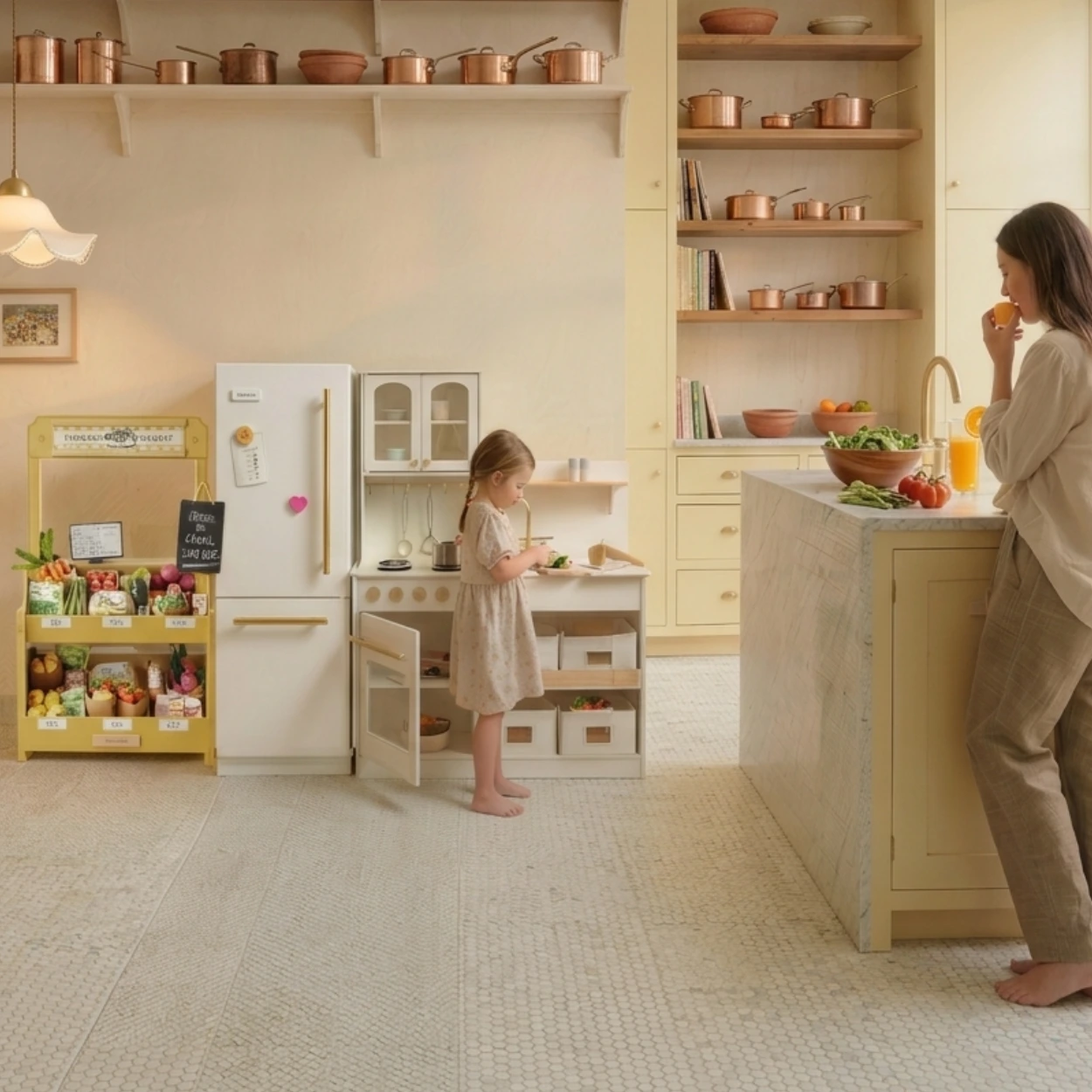
Instead of giving each toy its own activity, try connecting them through a simple story:
Home → Kitchen → Train Station → Neighborhood
This gives children a reason to move between toys, make decisions, and decide what happens next.
You don't need a complicated playroom setup. Start with the toys your child already enjoys.
|
Toy
|
Possible Role
|
|
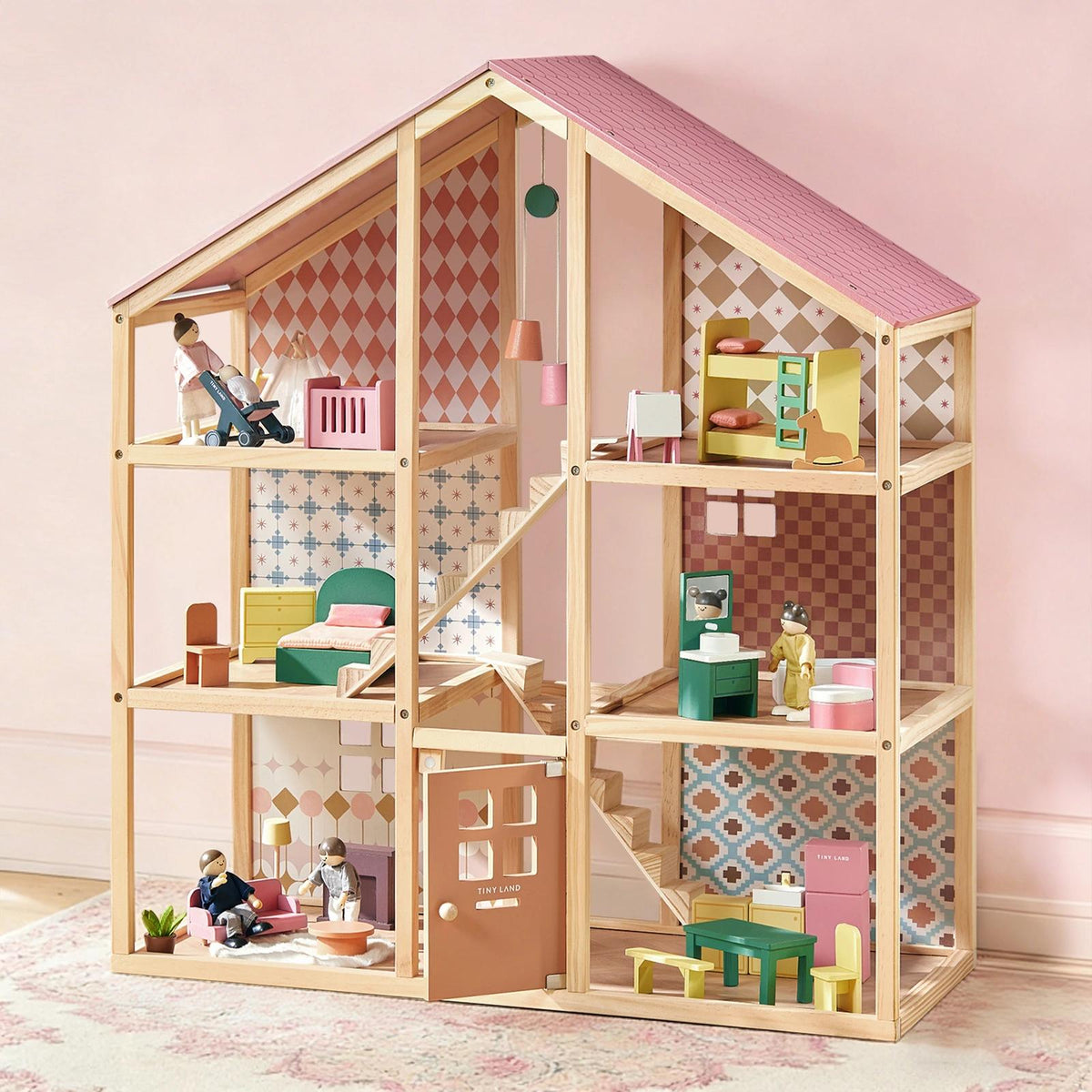
Dollhouse
|
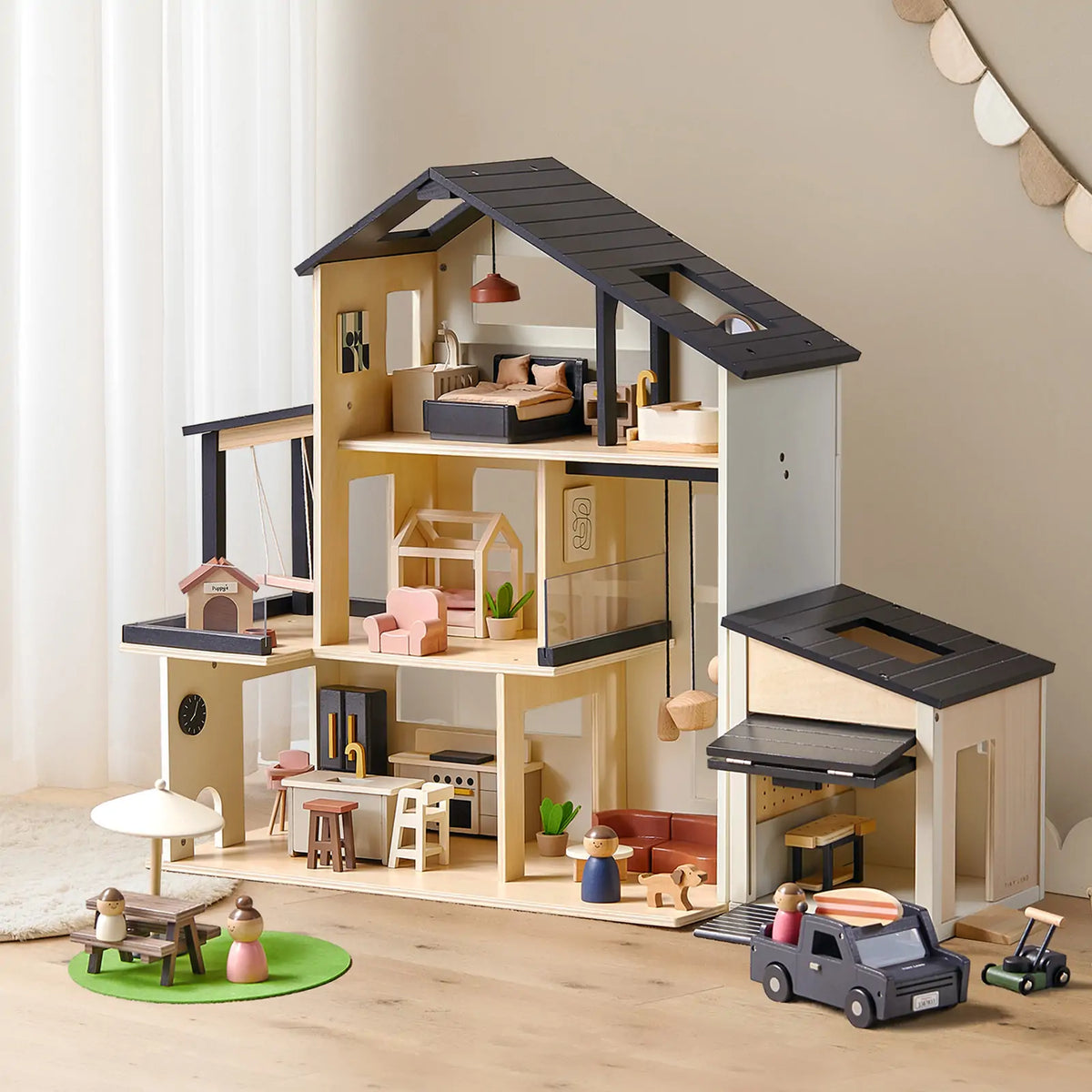
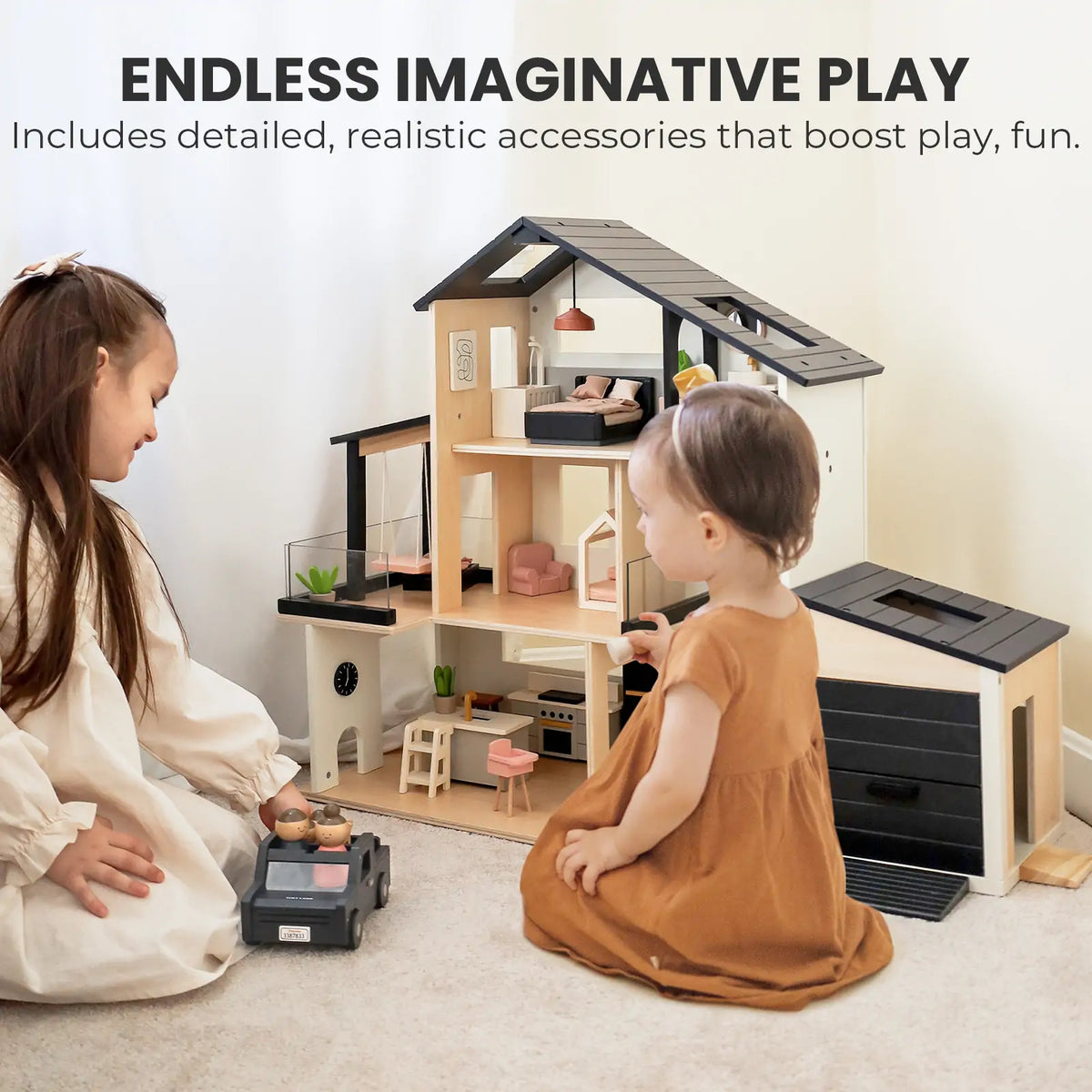
Family home or neighborhood
|
|
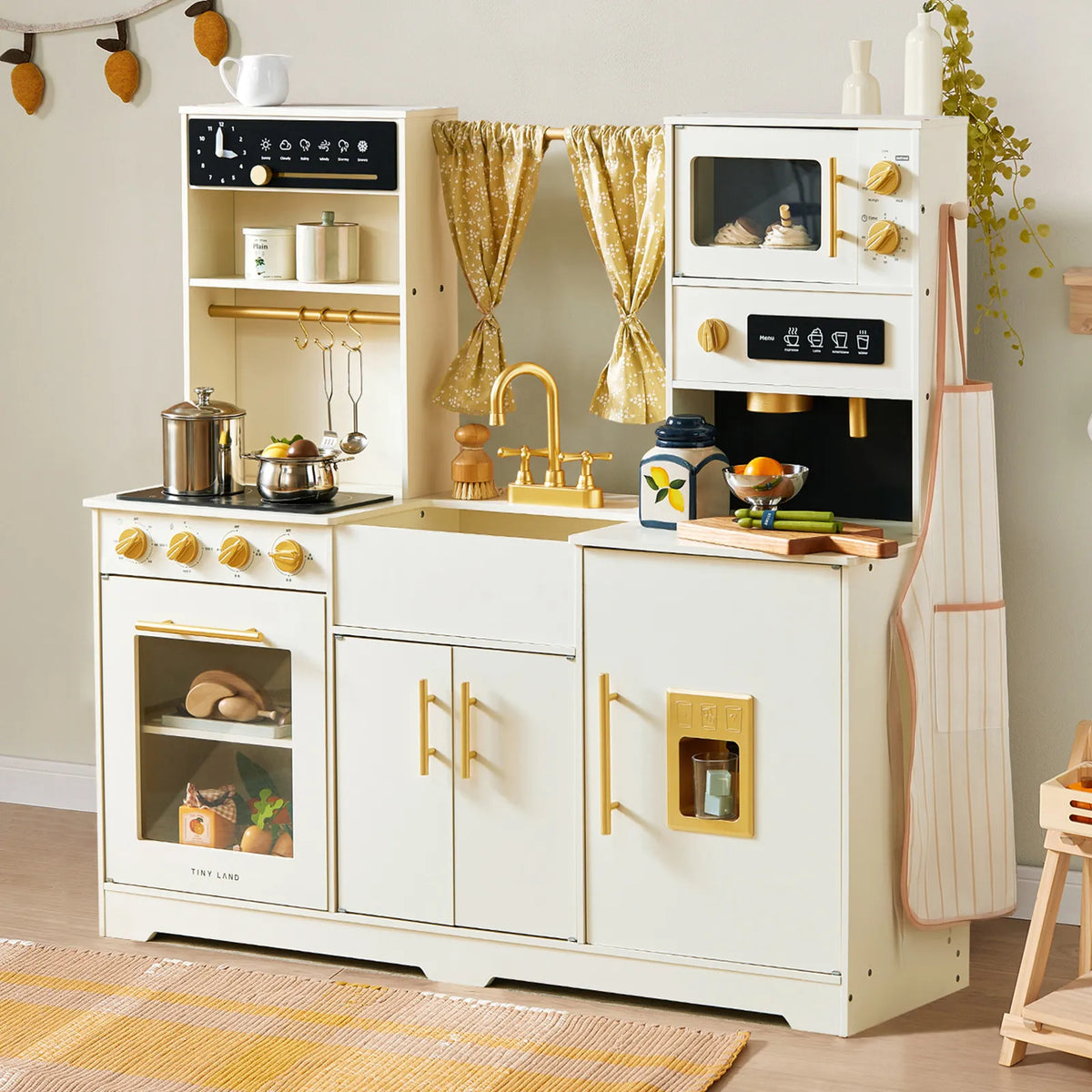
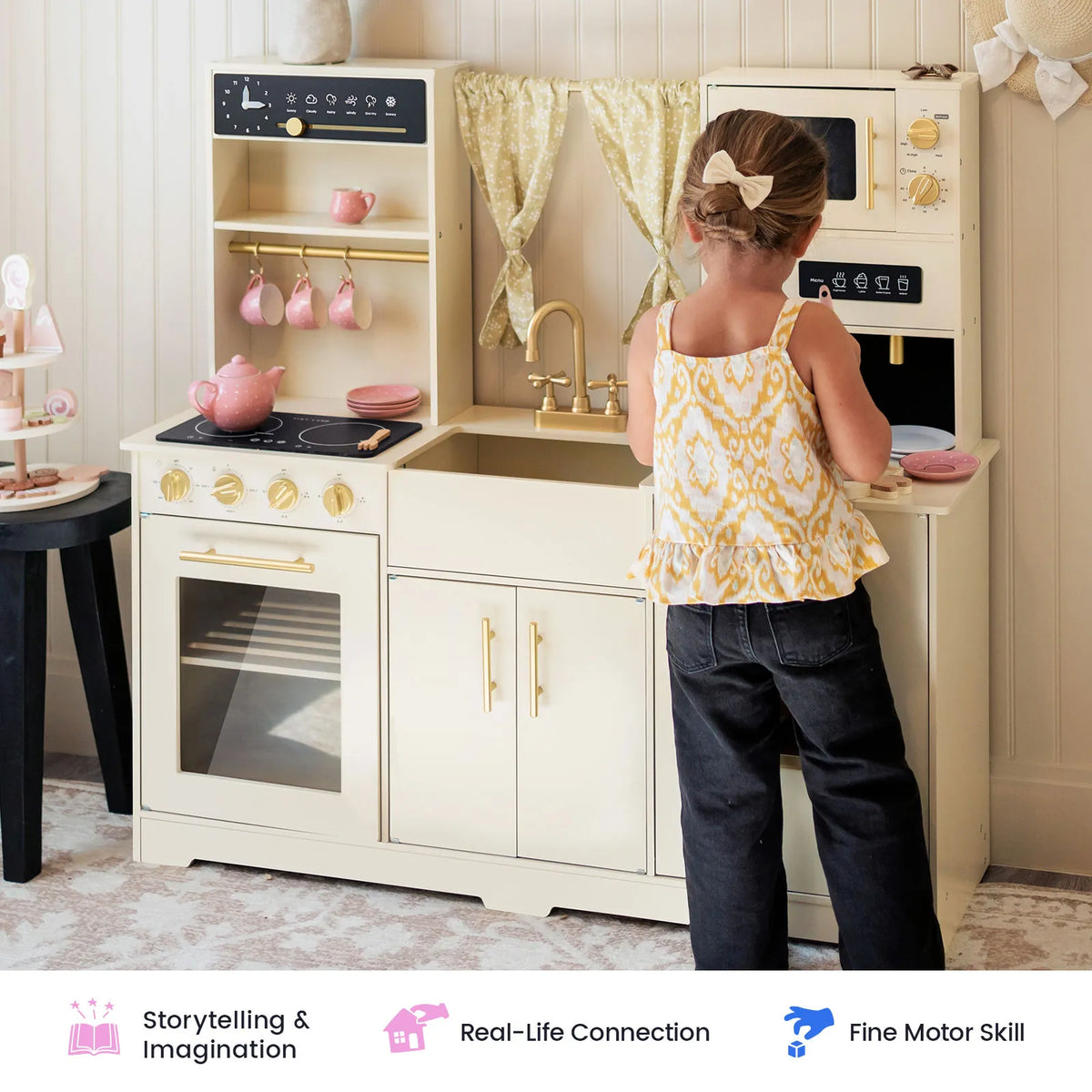
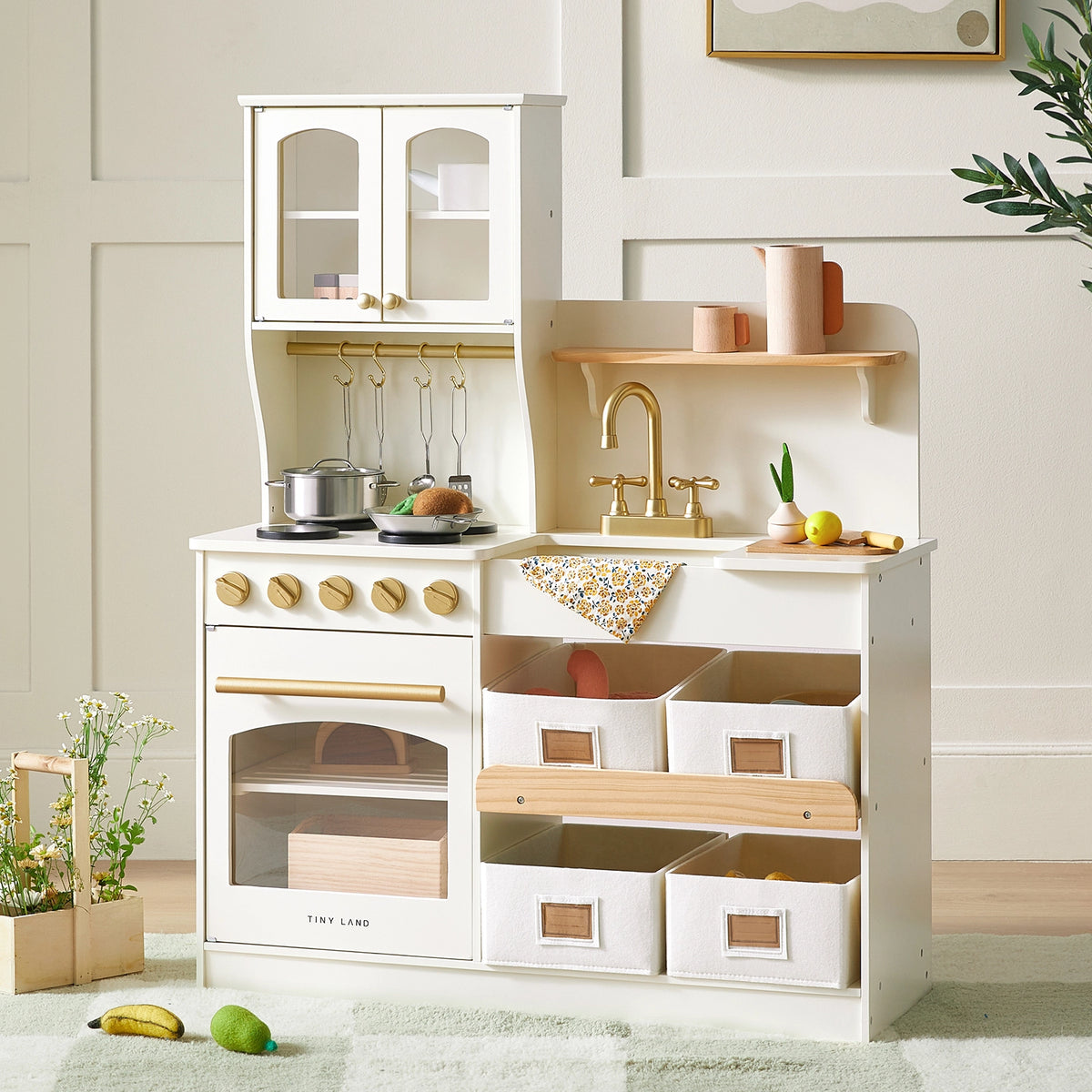
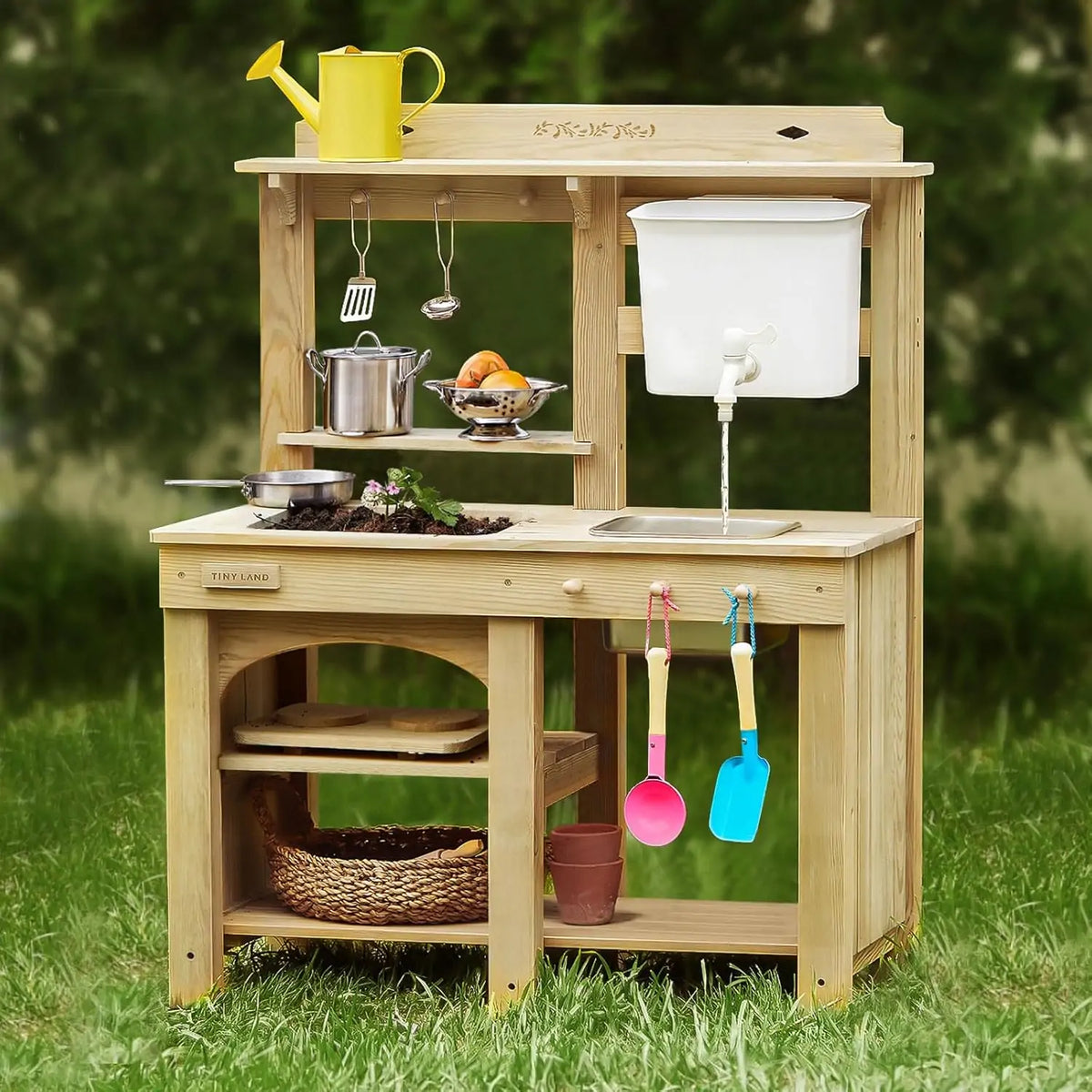
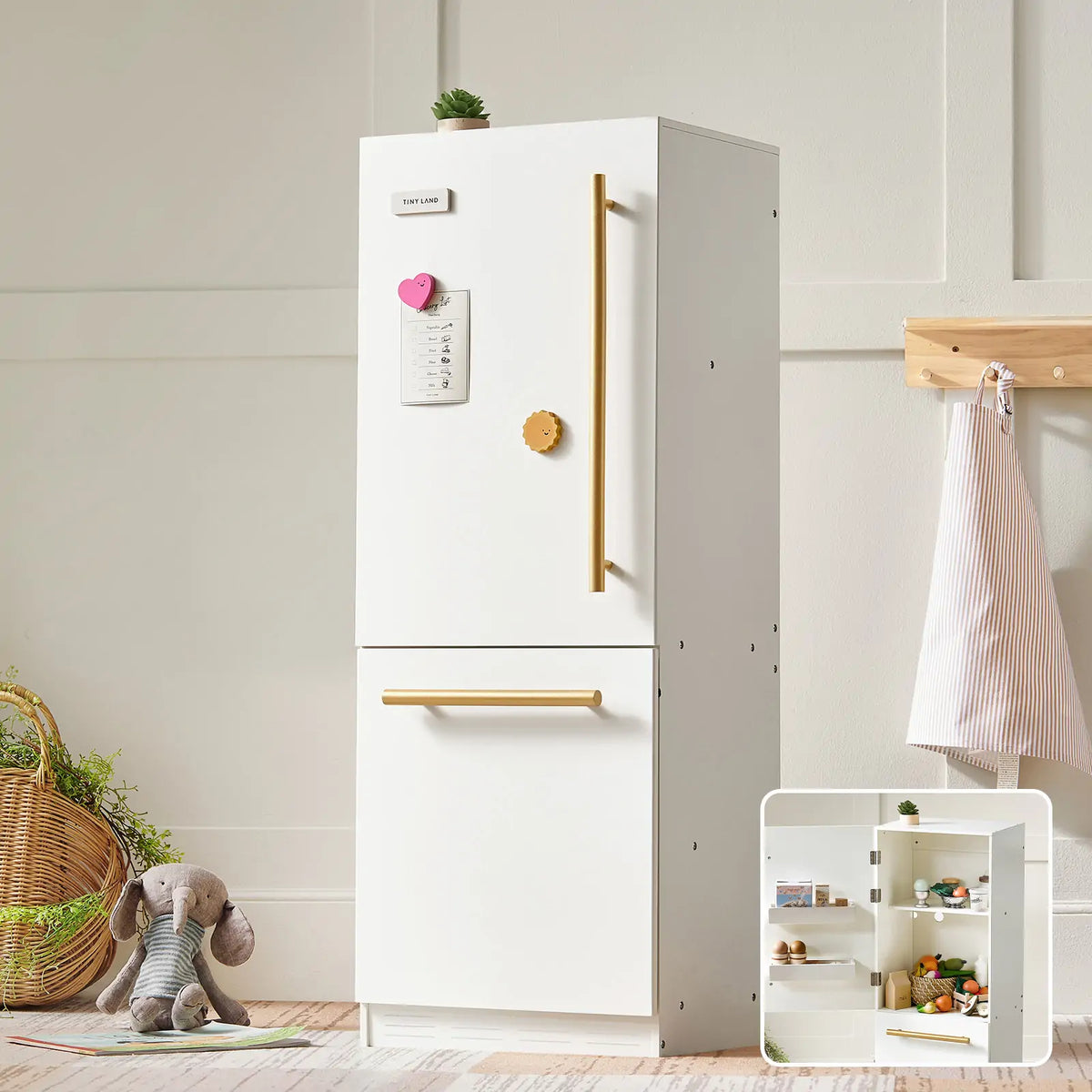
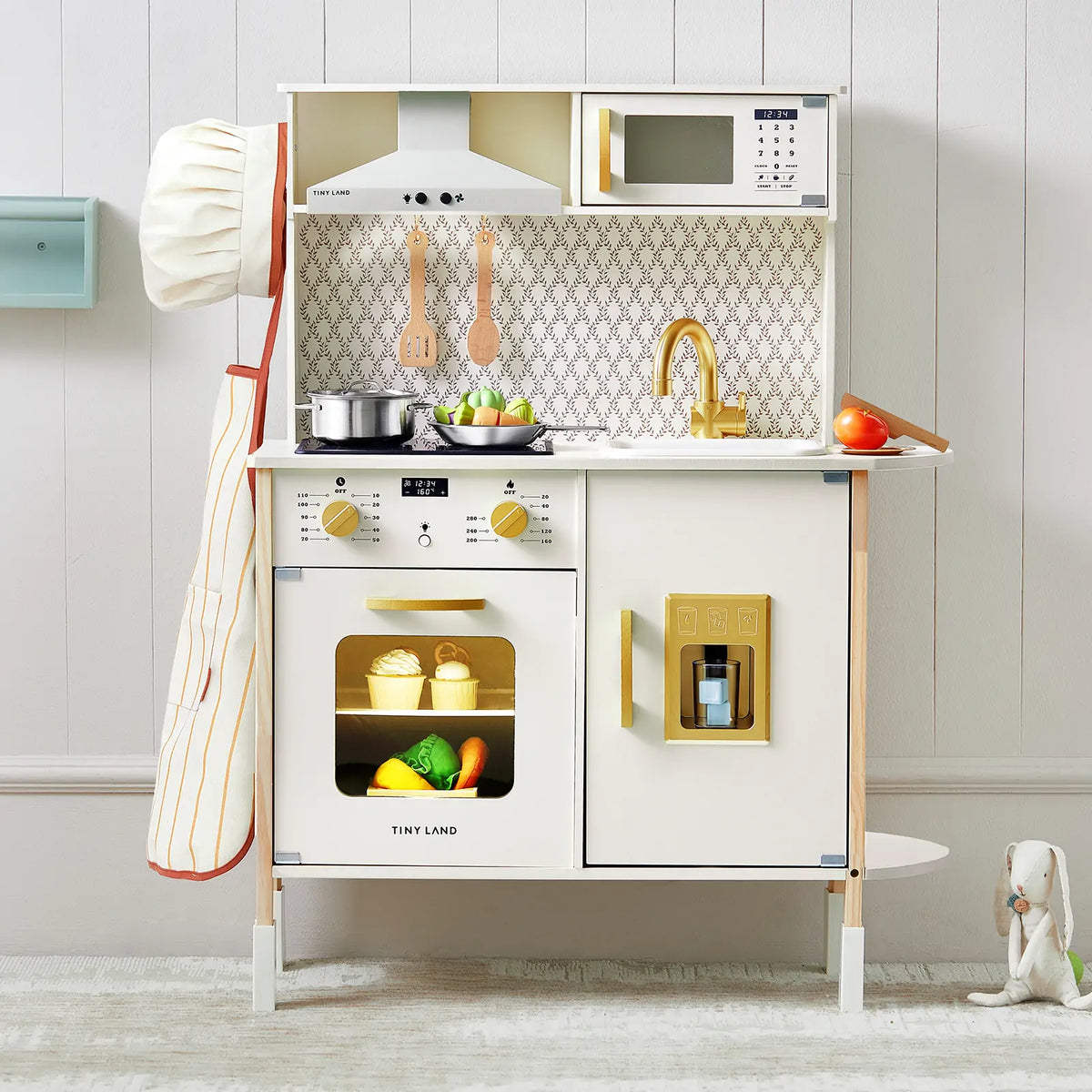
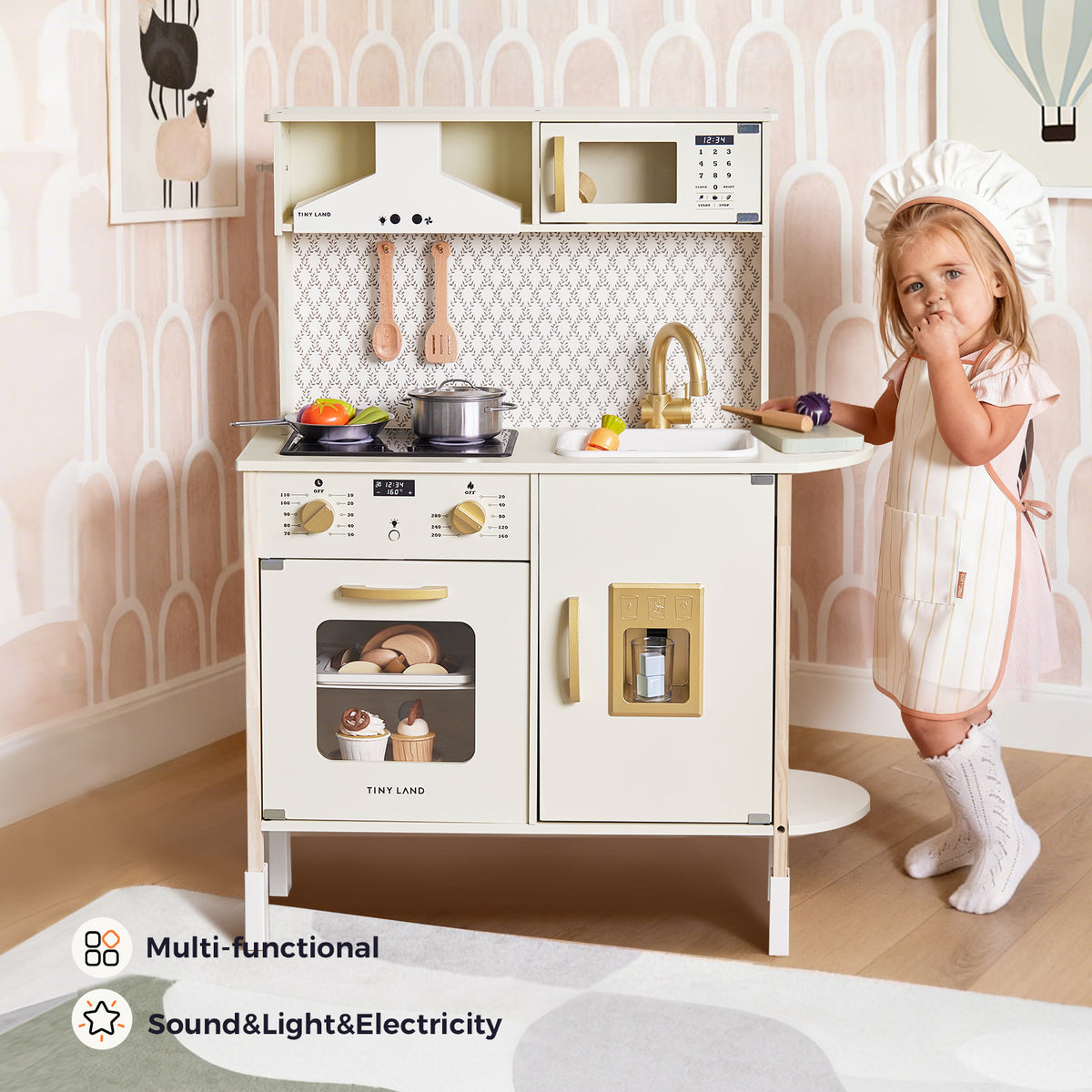
Play Kitchen
|
Kitchen, café, bakery, or restaurant
|
|
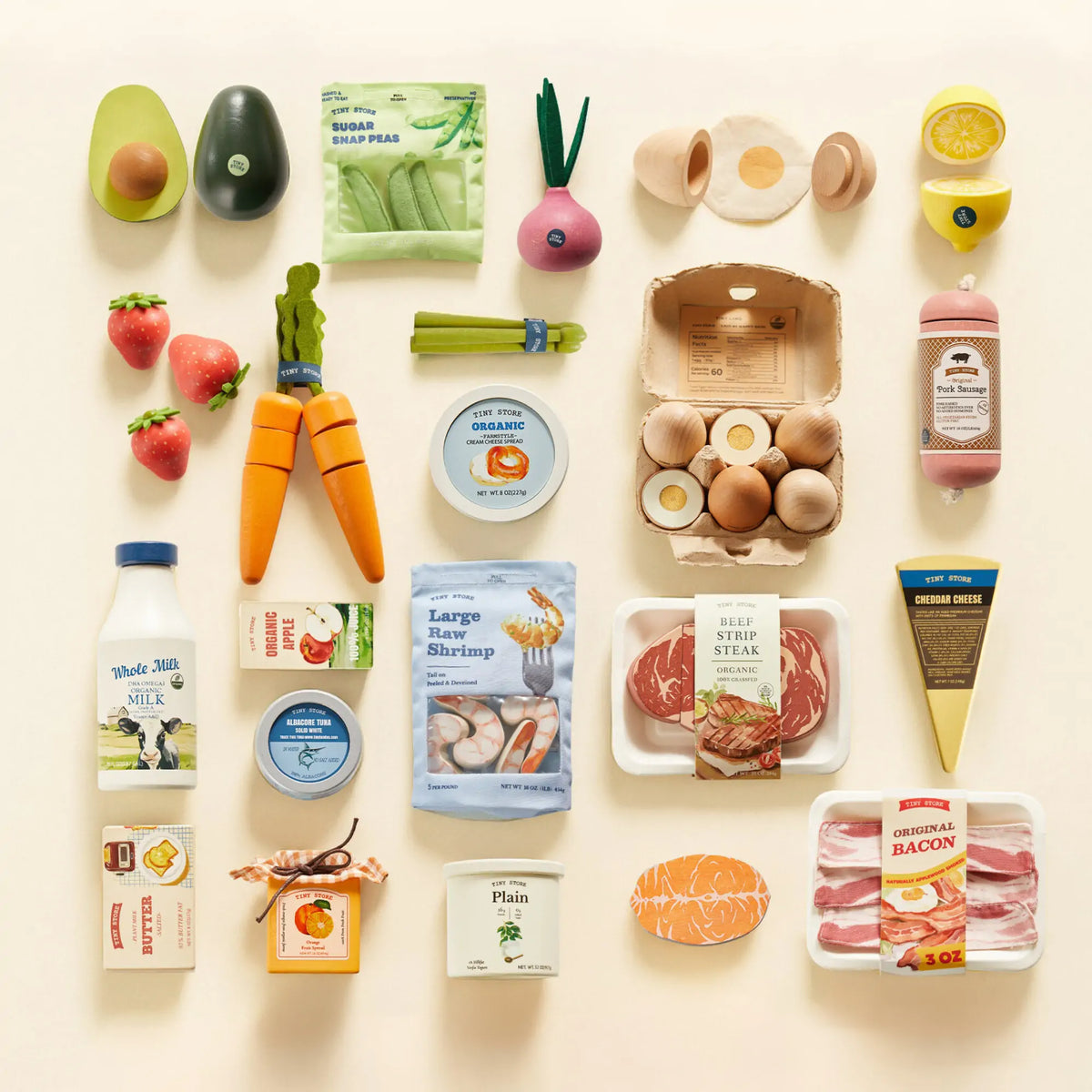
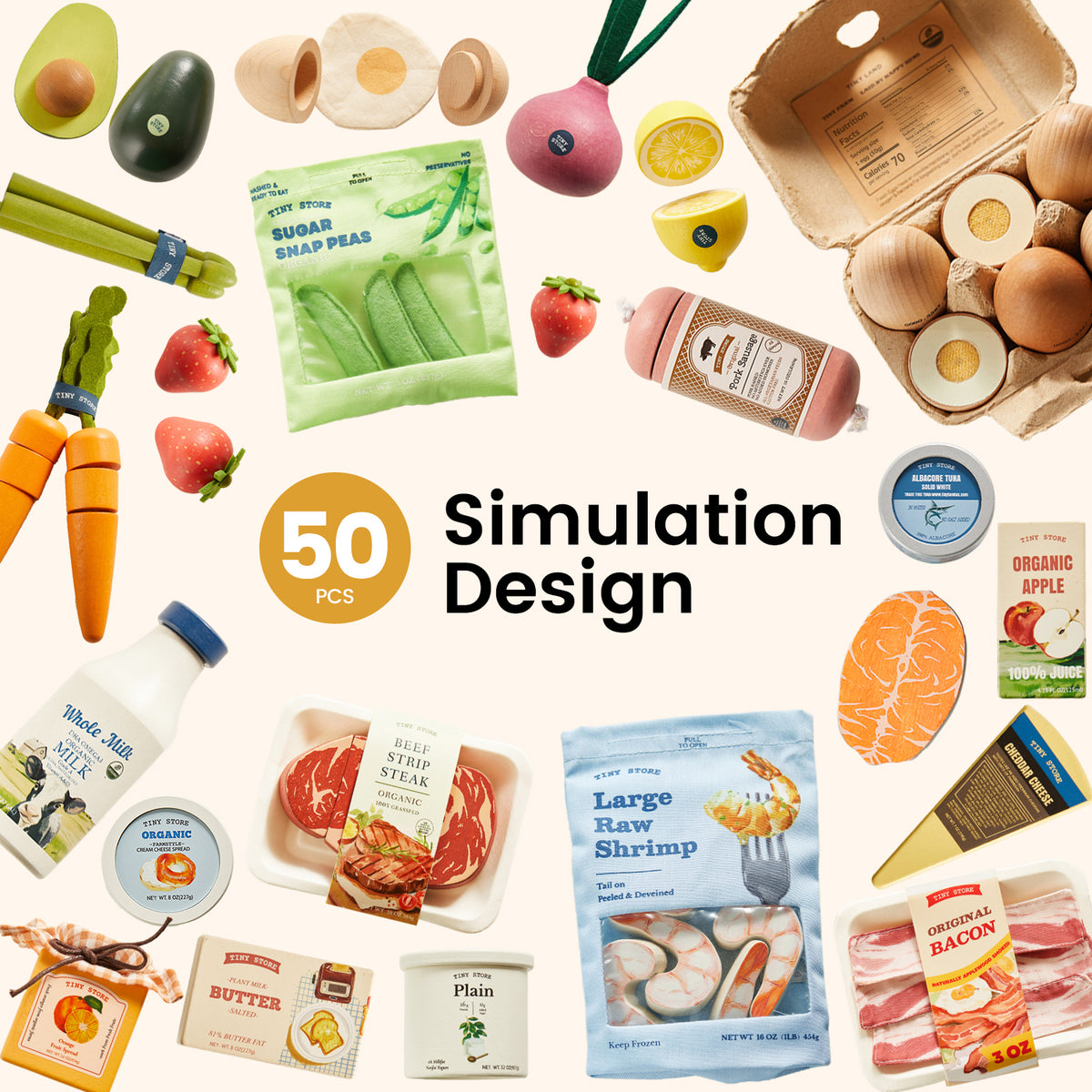
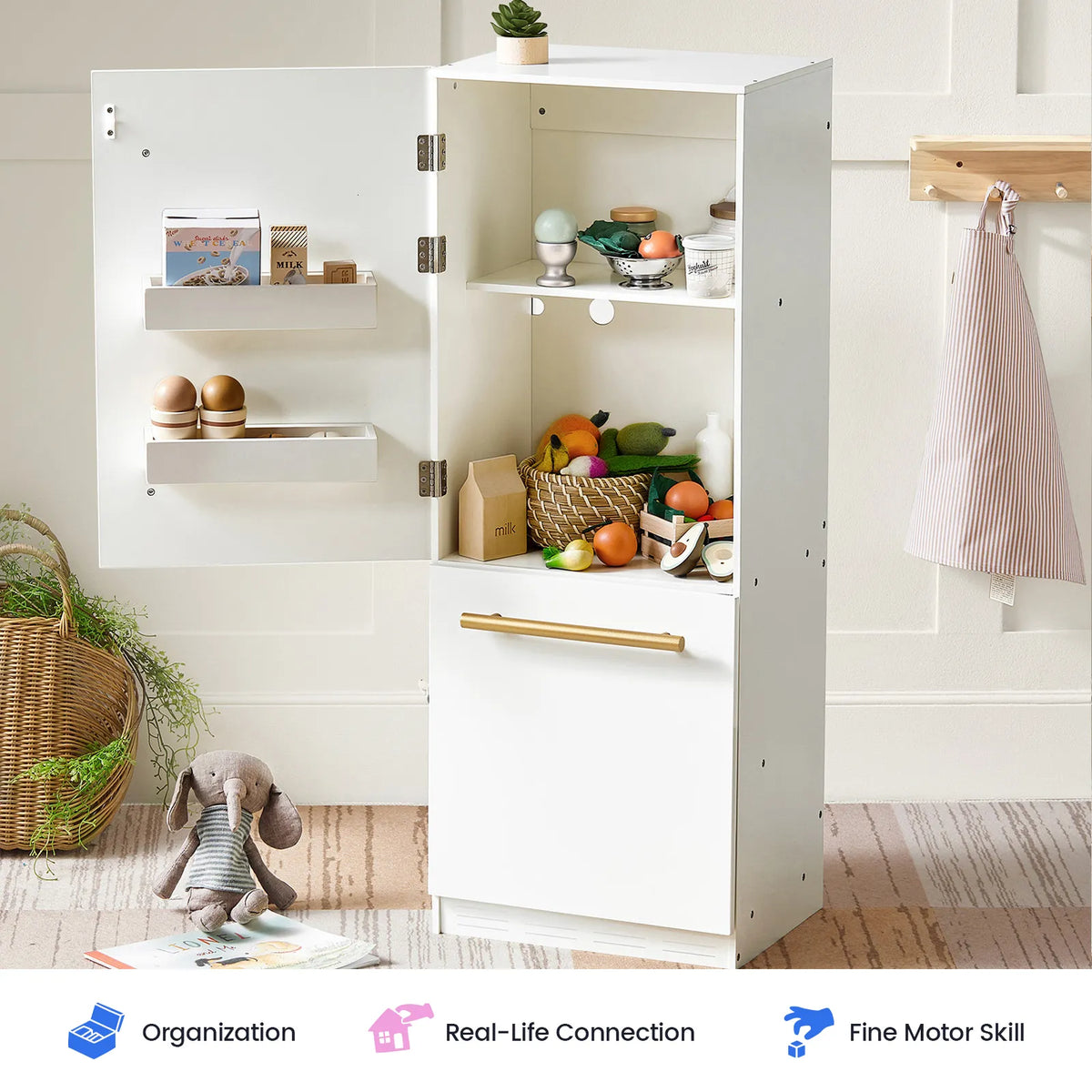
Play Food
|
Groceries, meals, snacks, or orders
|
|
Train Set
|
Transportation, station, or delivery route
|
Then create a reason for the characters to move between them.
For example:
The family lives in the dollhouse → visits the restaurant → orders food → takes the train home.
The important part isn't the setup.
It's the connection between the toys.
3 Easy Pretend-Play Ideas Using Multiple Toys
1. Open a Neighborhood Restaurant
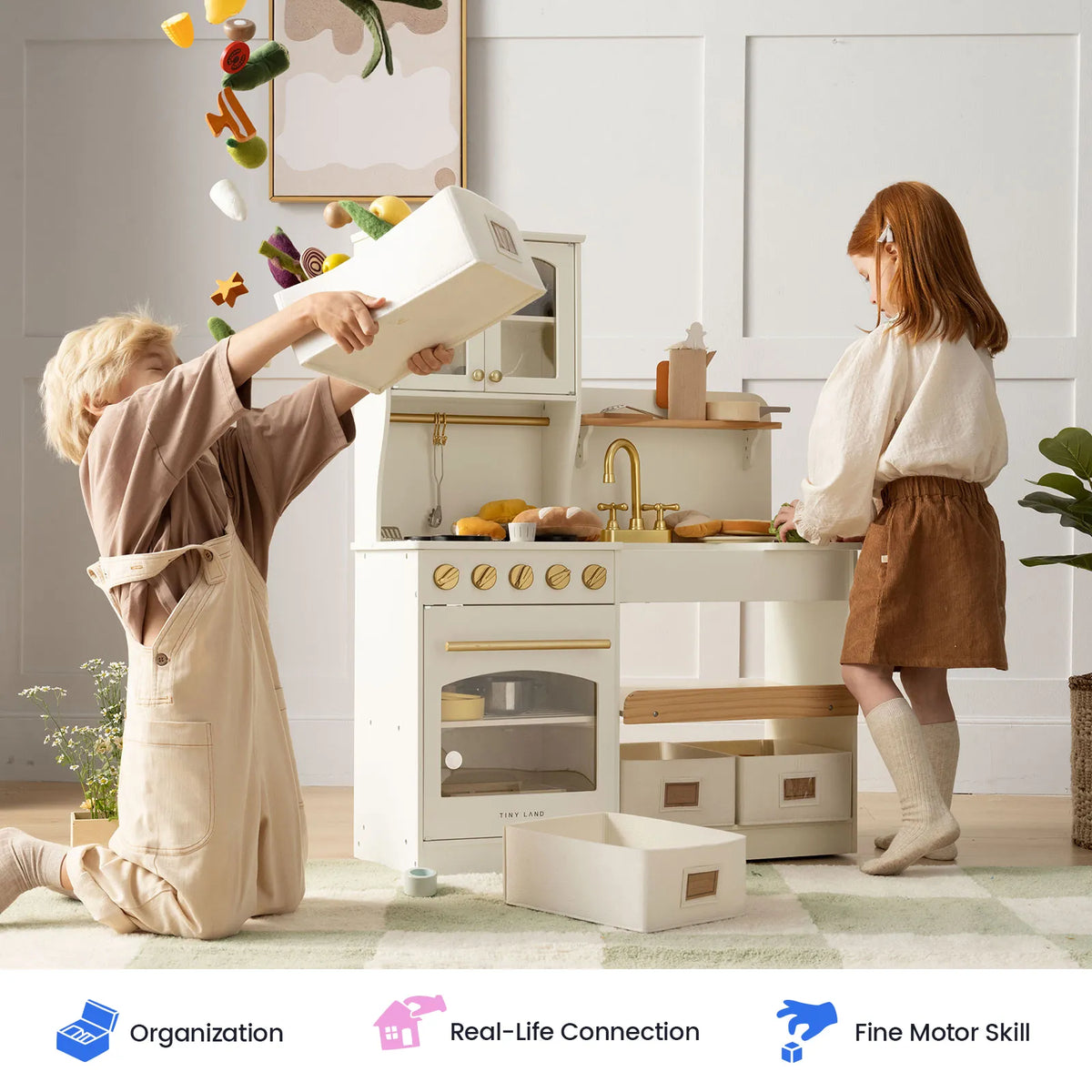
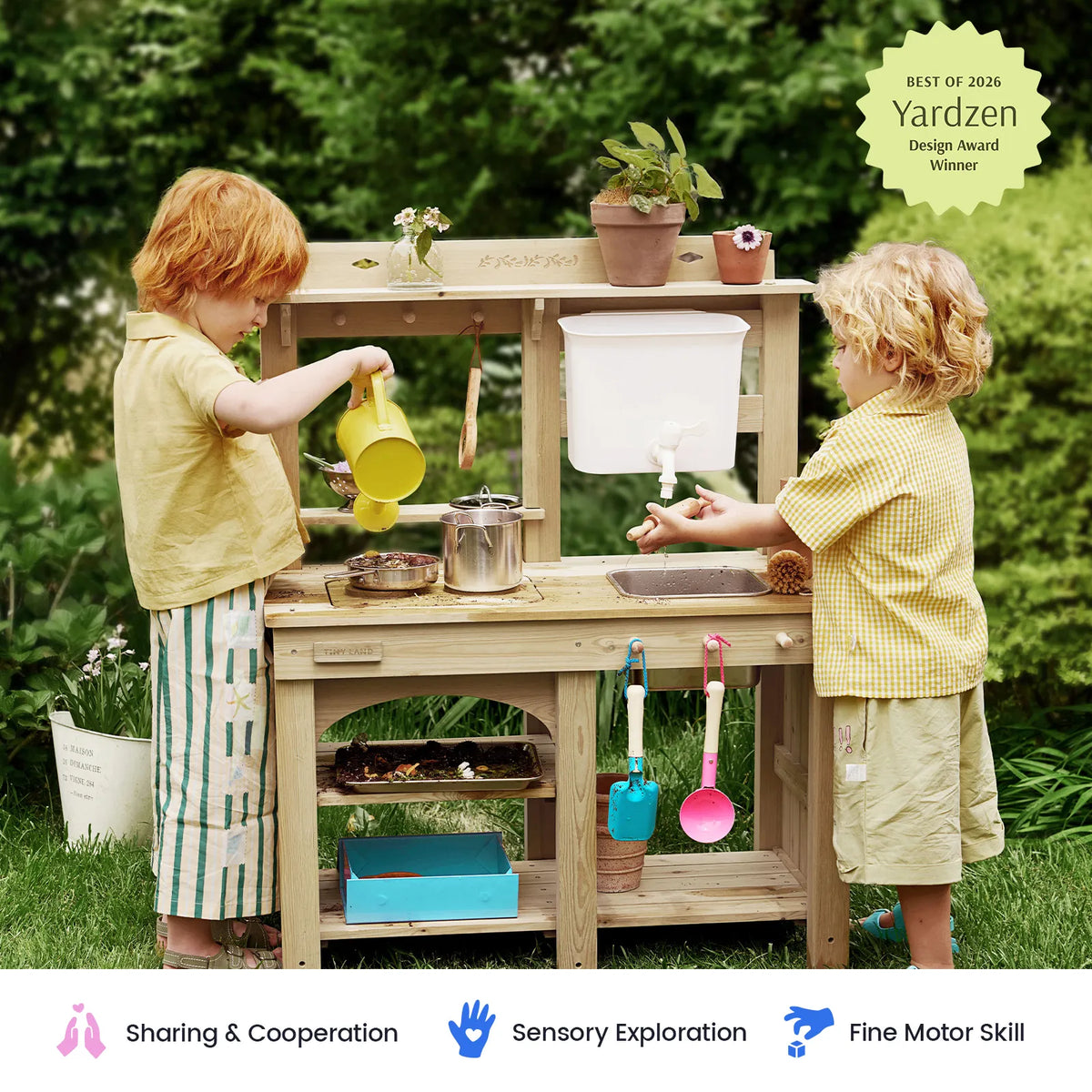
Turn the play kitchen into a restaurant.
The dollhouse characters become customers, play food becomes the menu, and the train can deliver meals to nearby homes.
Ask:
"The family is hungry. What should they order?"
Then:
"How will they get to the restaurant?"
Your child might choose the train, walk the characters there, or invent another way.
Now add a small problem:
"Three families ordered dinner. How can we deliver all the food?"
There is no single right answer. Your child can decide who prepares the food, which train delivers it, and what happens next.
This turns separate toys into one continuous story.
2. Take a Family Train Trip
Use the dollhouse as the starting point.
Prepare pretend food in the play kitchen, pack play food as snacks, and use the train set for the journey.
Try this simple sequence:
Get Ready → Pack → Travel → Arrive → Return Home
Ask:
"Where should the family go?"
The destination could be a farm, a friend's house, a restaurant, or an imaginary place.
Then introduce an unexpected event:
"The train has stopped. What should we do?"
Let your child solve the problem.
The goal isn't to find the "correct" answer. It's to give your child space to change the story and create a solution.
3. Create a Pretend Delivery Route
Turn the train set into a delivery service.
Set up:
Play Kitchen → Train Station → Dollhouse
The kitchen prepares an order.
The train delivers it.
The dollhouse family receives it.
Ask:
- What did they order?
- Who is it for?
- Where does it go?
- How will it get there?
Then expand the route:
Market → Bakery → Restaurant → Home
You can use everyday objects to create additional locations. A basket can become a market, a table can become a restaurant, and a chair can become a train station.
Pretend play doesn't require a perfect setup.
Children can decide what ordinary objects represent.
Let Your Child Build the Story
You don't need to control what happens next.
Instead of giving your child a complete storyline, use questions that leave room for their ideas:
- "Where are they going?"
- "Who is coming?"
- "What do they need?"
- "What happens next?"
- "How can we fix it?"
You can also join as a character:
"Hello! I'm calling from the train station. We have a delivery for the restaurant."
Then let your child decide how the story continues.
This keeps pretend play child-led and open-ended rather than turning it into a fixed script.
What Children Practice When Toys Become Part of One Story
Connecting toys gives children opportunities to link characters, places, actions, and events.
As they build the story, they may practice:
-
Storytelling — creating events and deciding what happens next.
- Language — describing characters, actions, and ideas.
- Planning — deciding what characters need and where they should go.
- Problem-solving — finding solutions when something changes.
- Flexible thinking — changing roles, routes, or plans.
- Social skills — negotiating roles and ideas with siblings or friends.
The toys aren't the lesson.
The story is the play, and the learning happens through it.
Build a Tiny Land Pretend-Play World
At Tiny Land, we believe open-ended toys can become more engaging when children are free to connect them and create their own stories.
Try combining:
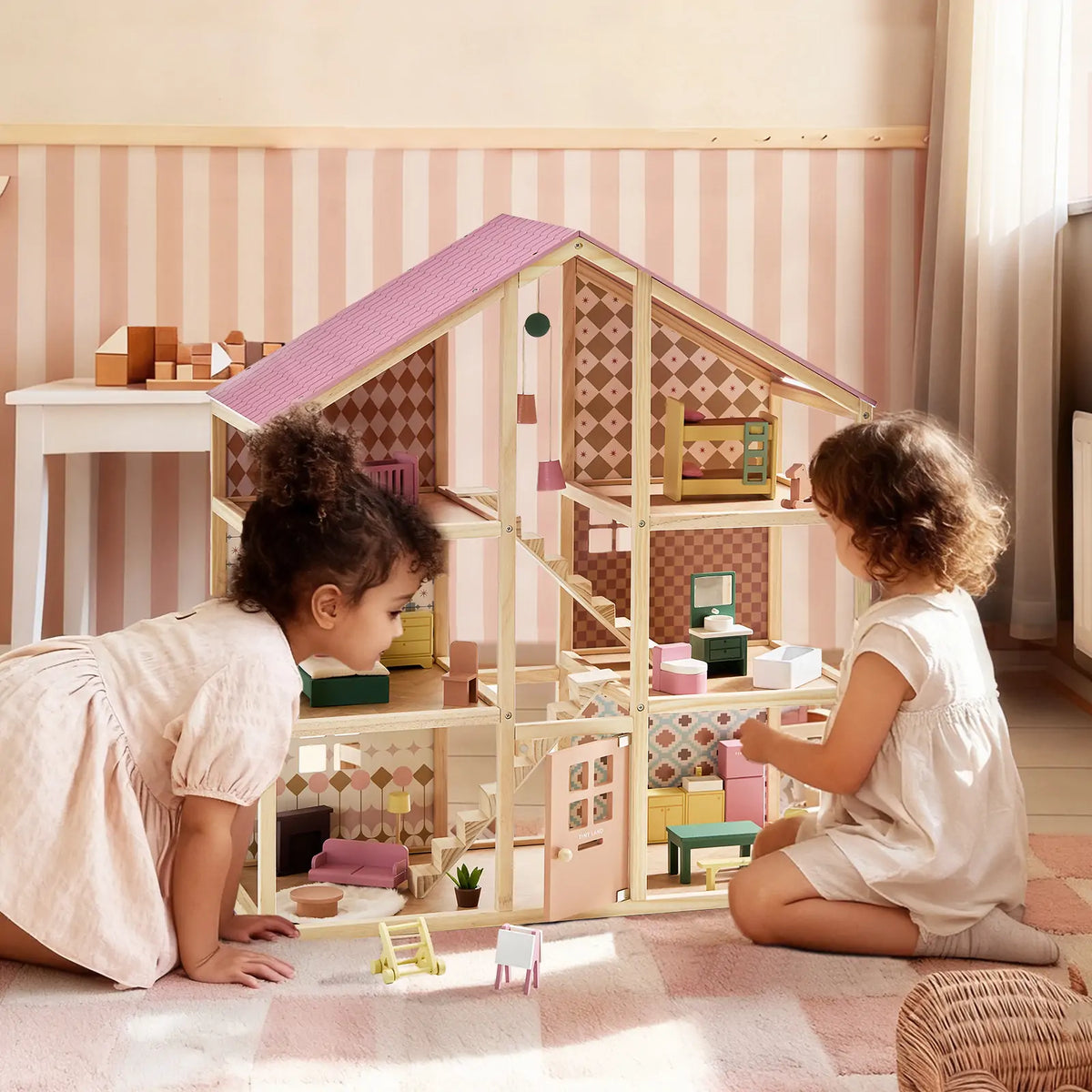
- Dollhouse → Home
- Play Kitchen → Restaurant
- Play Food → Meals & Groceries
- Train Set → Transportation & Delivery
One day, the train might deliver dinner.
The next day, it might take the family on vacation.
The kitchen could become a bakery, while the dollhouse becomes a hotel.
The toys stay the same. The story changes.
You Don't Need More Toys. Connect the Ones You Have.
The next time your child's dollhouse, play kitchen, play food, and train set are spread across the playroom, try connecting them instead of separating them.
Start with one question:
"What if these toys were all part of the same story?"
Then let your child decide what happens next.
Because the best pretend-play world isn't always the one adults design.
It's the one children create.
FAQ
Can a dollhouse and play kitchen be used together?
Yes. A dollhouse can become the family home while the play kitchen becomes a restaurant, café, or kitchen. Add play food and a train set to connect the locations into one pretend-play story.
How can I use a train set for pretend play?
A train can become transportation, a delivery service, or a way to connect different locations in a pretend-play world.
What are good dollhouse play ideas?
Try creating a family restaurant, grocery trip, neighborhood visit, family journey, or delivery story using the dollhouse with other open-ended toys.
What are easy play kitchen activities for preschoolers?
Children can pretend to cook meals, run a restaurant, operate a bakery, prepare food for a trip, or make deliveries to other characters.